Brown Butter Miso Cookies: The Sweet-Savory Cookie That Broke My Brain (March 2026)

I need to confess something as someone who has baked an unreasonable number of cookies: most cookies are too sweet. Not bad. Not inedible. Just one-note.
That was the wall I kept hitting this spring. I wanted to refresh my basics, test my brown butter base again, and dial in my "forever" chocolate chip cookie. Instead, I ended up in a miso rabbit hole that fully changed how I think about cookie flavor.
And yes, this connects to Popo.
Growing up in our Cantonese kitchen, she was always adding what I used to call "extra stuff." I thought she was being dramatic. Turns out she was engineering depth.
These brown butter miso cookies are that same idea in dessert form.
The Cookie Problem Nobody Says Out Loud
If a cookie tastes flat, most people reach for more sugar, more chocolate, or more vanilla.
That usually makes the problem worse.
Sweetness has a ceiling. Once you hit it, adding more just crowds everything else out. What you actually need is contrast and backbone.
Umami is the missing lever.
Miso brings glutamates (and other fermentation-built flavor compounds) that make the cookie taste deeper without making it "savory" in an obvious way. You still taste a cookie. You still taste sweetness. But your palate reads more dimension and less sugar blast.
That is why miso chocolate chip cookies work when they work.
What Miso Actually Does in Dough
Quick practical version, no food-science lecture:
- Miso is salty, but not just salty.
- Fermentation builds amino-acid-rich complexity that plain salt can't replicate.
- In a butter-heavy dough, miso distributes more evenly than just adding extra salt.
I tested three types over 50+ batches total (because I cannot leave anything alone):
- White miso (shiro miso): best for cookies. Mild, slightly sweet, easy to integrate.
- Red miso (aka miso): bold and funky fast. Useful, but easy to overdo.
- Black miso (hatcho): too assertive here.
My usable range for home bakers:
- White miso: 1.5 to 2 tsp per batch (sweet spot = 2 tsp)
- Red miso: up to 1.5 tsp max, and even then watch your chocolate choice
- Black miso: skip for this recipe unless you want an intentionally aggressive flavor
Also: miso flavor survives baking just fine. You lose some top-note funk, but the umami backbone stays.
The Honest Fails (Because They Matter)
I had three memorable disasters:
Fail #1: White miso too timid
I started at 1 tsp and basically couldn't taste the difference unless I compared side-by-side.
Fail #2: The overcorrection
I jumped too hard and added an extra 0.5 tsp on top of my adjusted formula in one batch. Texture was fine, but finish got muddy and vaguely salty-sour. Not horrible, just confusing.
Fail #3: Red miso sugar bomb
At higher amounts, red miso + sugar tasted like someone spread miso paste on a cookie and called it innovation. This is the batch that taught me restraint. If your first bite says "miso" before it says "cookie," you went too far.
The useful lesson: evaluate the finish, not the first 2 seconds.
Brown Butter Miso Cookies (The Version I Actually Stand Behind)
Makes about 16 medium cookies
Ingredients
- 170 g unsalted butter
- 115 g dark brown sugar
- 70 g granulated sugar
- 2 tsp white miso paste (about 12 g)
- 1 large egg + 1 egg yolk, room temp
- 2 tsp vanilla extract
- 220 g all-purpose flour
- 1/2 tsp baking soda
- 1/2 tsp baking powder
- 3/4 tsp kosher salt
- 170 g dark chocolate, chopped (70% works best)
- Optional: flaky salt for finishing
Use dark chocolate (around 70% or higher) or skip chocolate entirely. Miso + white chocolate tasted disjointed in testing.
Method
Brown the butter properly.
Melt butter in a light-colored pan over medium heat. It will foam, sputter, then milk solids at the bottom turn amber-brown and smell nutty. Pull it off heat immediately.
Cool and dissolve miso.
Transfer browned butter (including all toasted bits) to a bowl. Cool 10 to 15 minutes so it's warm, not hot. Whisk in white miso until fully smooth. No lumps.
Build the base.
Whisk in brown sugar and granulated sugar. Add egg, yolk, and vanilla; whisk until glossy and thickened slightly.
Add dry ingredients.
Fold in flour, baking soda, baking powder, and kosher salt just until no dry streaks remain.
Fold chocolate and rest.
Fold in chopped dark chocolate. Cover and chill dough at least 1 hour (ideally 12 to 24 hours for better flavor and spread control).
Bake.
Heat oven to 350°F (175°C). Scoop 2 tbsp portions onto a lined sheet, spacing well apart. Bake 10 to 12 minutes, until edges are set and centers are still soft.
Finish.
If using flaky salt, add a tiny pinch while warm. Cool on pan for 5 minutes, then move to a rack.
Texture and flavor target
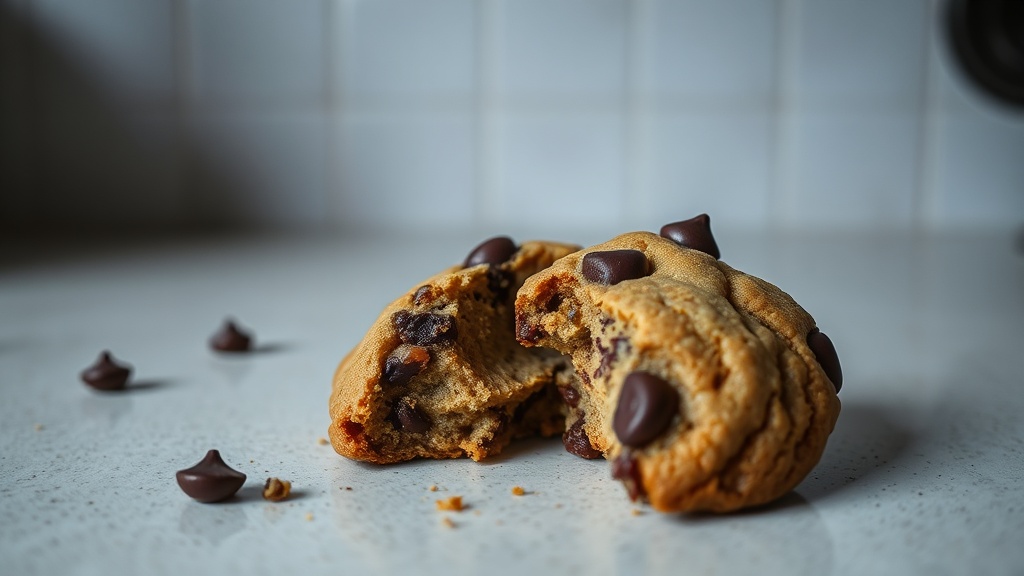
- Crisp edge
- Soft center
- Caramelized butter aroma
- Chocolate bitterness balancing sweetness
- A savory-salty finish that makes you want another bite, not a glass of water
That is the entire goal of this umami cookies recipe.
Flavor Architecture (Why I Care So Much)
I don't think this is a trend thing, and I'm not trying to put miso in everything I bake. This is about understanding structure: sweetness is not depth.
Depth is built in layers.
Popo understood this instinctively in savory baking. Her char siu bao filling had sugar, fat, salt, and fermented depth all pulling in the same direction.
When I finally got this cookie right, I realized I wasn't inventing anything. I was just catching up.
If you're into cookie flavor science, think of this as your framework:
- Sweetness gives immediate impact.
- Fat carries aroma and length.
- Salt sharpens.
- Umami extends finish and lowers perceived sweetness.
- Bitterness (from dark chocolate and browned milk solids) prevents cloying.
That balance is why these read as rich instead of sugary.
How to Dial In Your Own Miso Level
If your miso brand is saltier or funkier than mine, use this test method before committing a full batch.
- Mix one base dough with 1.5 tsp white miso.
- Split into three small bowls.
- Leave one as-is.
- Add 1/4 tsp extra miso to bowl two.
- Add 1/2 tsp extra miso to bowl three.
- Bake two cookies from each bowl.
- Taste side-by-side after fully cooling.
What to notice:
- Which one has the cleanest finish?
- Which one tastes less sweet without tasting salty?
If you only taste right out of the oven, you'll miss the signal. Cooled cookies tell the truth.
Quick FAQ
Can I use red miso instead of white?
Yes, but lower it. Start at 1 tsp, cap around 1.5 tsp. Red miso gets loud quickly.
Can I skip browning the butter?
Technically yes, but then this is a different cookie. Brown butter gives nutty Maillard notes that pair with miso's fermented depth.
Will these taste like soup?
If they do, your miso is too high. The correct version tastes like a better cookie, not a savory gimmick.
Spring baking always makes me want to rebuild fundamentals, and this recipe caught something I had been missing for years.
Not more sugar.
More structure.
If you bake these, do yourself a favor and test at least two miso levels side-by-side once. It will teach you more in one tray than ten perfectly staged recipe videos ever will.
Happy baking, happy experimenting.