The Science of Tangzhong: The Secret to Bakery-Soft Bread

So here's the thing about tangzhong: it looks fussy, but it's actually one of the highest-payoff steps in home baking.
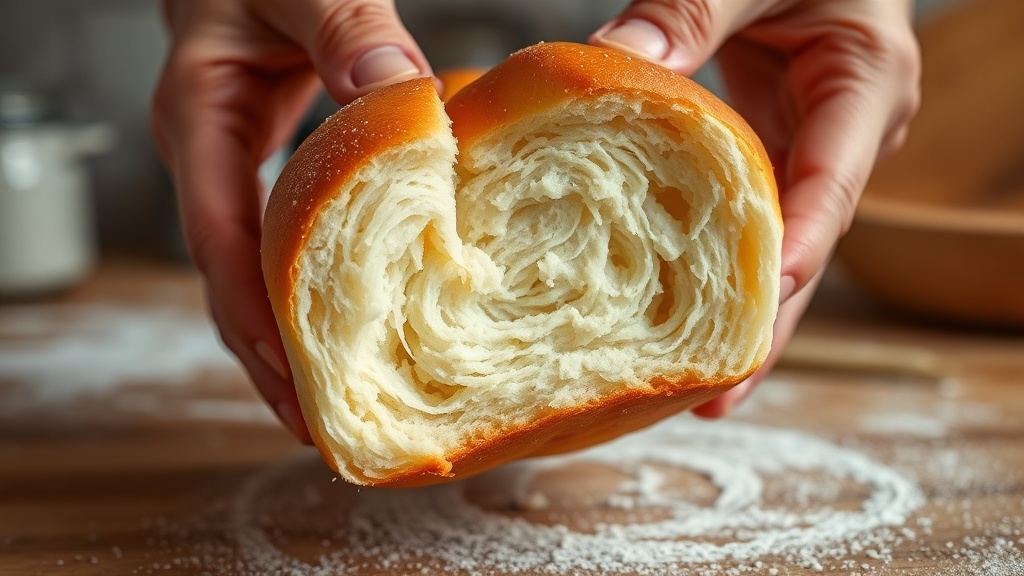
If you love that pull-apart softness from Asian bakery loaves, this is the soft bread secret. And in early March, when it's still chilly enough to keep the oven on all weekend, it's a perfect technique project.
Short answer: tangzhong works because pre-cooked flour holds onto way more water than raw flour, so your bread stays softer longer.
What Is Tangzhong?
Tangzhong (also called water roux bread method) is a paste made by cooking a small portion of your recipe's flour with liquid before mixing the dough.
Most formulas use:
- 5-10% of total flour (by weight)
- 1 part flour : 5 parts liquid (by weight)
- Heated to about 65°C / 149°F
That 65°C point is why you'll also hear people mention Yvonne Chen's 65°C Bread Doctor (2007), the book widely credited with popularizing the method for home bakers.
Tangzhong Science (Without the Food Science Degree)
Here's what actually matters:
- Flour starch granules absorb water as they heat.
- Around this range, they begin to swell and gelatinize.
- Gelatinized starch can hold water much more effectively than raw flour.
So when you add tangzhong to dough, that dough can carry more hydration without turning into soup. More bound water = softer crumb and slower staling.
This lines up with what baking educators describe: tangzhong boosts moisture retention and extends softness in enriched breads and rolls.
Tangzhong vs Yudane (Quick and Useful)
Both methods pre-gelatinize starch. They just get there differently.
- Tangzhong: Cook flour + liquid together on heat (usually 1:5)
- Yudane: Pour boiling water over flour, mix, and rest (often stiffer, commonly around 1:1)
My practical take:
- Want very fluffy, cloud-soft milk bread? Start with tangzhong.
- Want less stovetop work and don't mind a slightly chewier bite? Yudane is great.
The "Lines in the Pan" Test (No Thermometer Needed)
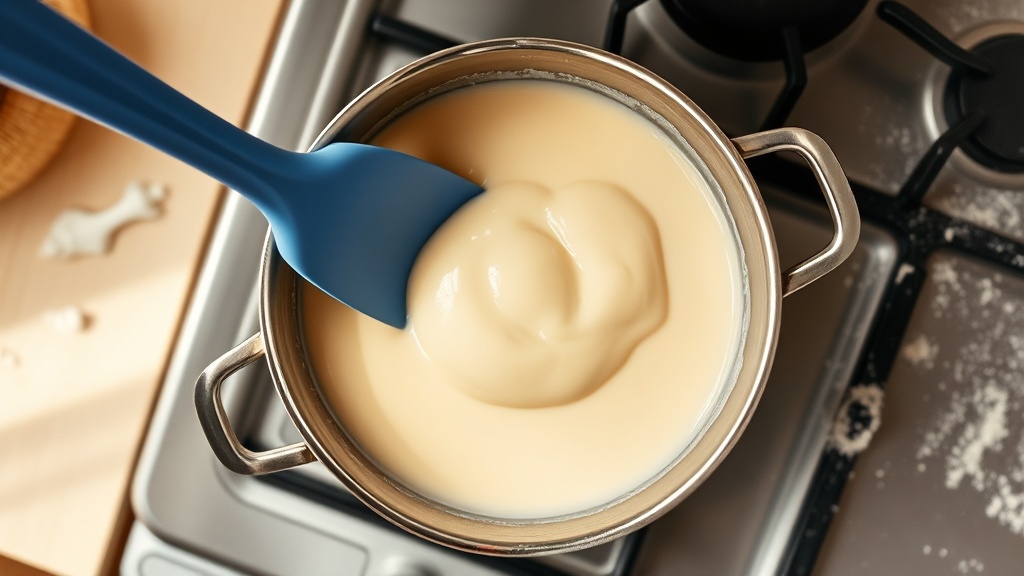
If you drag a spatula through the paste and it leaves visible lines that hold for 1-2 seconds before slowly filling in, you're there.
Visual cues:
- Looks glossy, smooth, and pudding-like
- Not dry, not clumpy
- Not thick like mashed potatoes
(If it's super thick and gluey, you probably overcooked it.)
How to Convert Any Bread Recipe to Tangzhong
Use this formula every time:
- Find total flour weight in your recipe.
- Multiply by 0.05 to 0.10 to choose tangzhong flour amount.
- Multiply that tangzhong flour by 5 for tangzhong liquid.
- Subtract both from the main dough ingredients.
Example Conversion
Original recipe:
- 500g flour
- 325g liquid
Convert with 8% tangzhong:
- Tangzhong flour: 500 x 0.08 = 40g
- Tangzhong liquid: 40 x 5 = 200g
New build:
- In tangzhong: 40g flour + 200g liquid
- Remaining dough: 460g flour + 125g liquid (+ your other ingredients unchanged)
Important: you're not adding extra flour/liquid; you're reallocating from the same formula.
My Notebook Results: 3 Tangzhong Ratios Tested
I tested this on the same milk bread base dough over three bakes:
- 1:4 ratio (flour:liquid in tangzhong): Easy to handle, slightly less dramatic softness
- 1:5 ratio: Best balance of softness + structure (my default)
- 1:6 ratio: Softest crumb on day 1, but dough needed gentler handling and longer knead to fully organize
Winner for most home bakers: 1:5. Trust me on this.
Sticky Dough Troubleshooting (Don't Panic-Add Flour)
If your tangzhong dough feels sticky, that's normal. Higher hydration is the point.
If dough feels too sticky at first
- Rest 10 minutes, then knead again (huge difference)
- Use slap-and-fold or mixer kneading instead of dumping in flour
- Lightly oil your hands/bench instead of flouring heavily
If dough still won't come together after proper kneading
- Add flour in tiny increments (5-10g), not handfuls
- Check if tangzhong was overcooked (too stiff paste can throw balance)
- Check protein level: bread flour usually handles this method better than lower-protein flour
If final bread is dense
- Underproofing is more likely than "too much water"
- Give it time to rise to visual cues, not just clock time
- Make sure your yeast is active (yes, still worth checking)
The Bottom Line
Tangzhong method isn't hype. It's practical starch science you can taste.
Once you understand the chemistry, the extra 5 minutes at the stove stops feeling annoying and starts feeling like a cheat code for softer bread that stays good for days.
If you've never tried it, start with 5-8% flour at a 1:5 ratio and watch what happens to your crumb.
Made a tangzhong loaf this weekend? Tell me how it went (and whether you team tangzhong or team yudane).
References
- King Arthur Baking: How to convert a bread recipe to tangzhong — https://www.kingarthurbaking.com/blog/2018/07/23/how-to-convert-a-bread-recipe-to-tangzhong
- King Arthur Baking: A closer look at tangzhong — https://www.kingarthurbaking.com/blog/2021/02/05/tangzhong-method-soft-pillowy-cinnamon-rolls
- American Society of Baking: Starch Gelatinization — https://asbe.org/article/starch-gelatinization/
- Background on naming/history (includes reference to Yvonne Chen's 2007 book): https://en.wikipedia.org/wiki/Tangzhong