Texture Mashups Are Everywhere in 2026. Here's How to Nail Them at Home.

I will tell you about my first crookie.
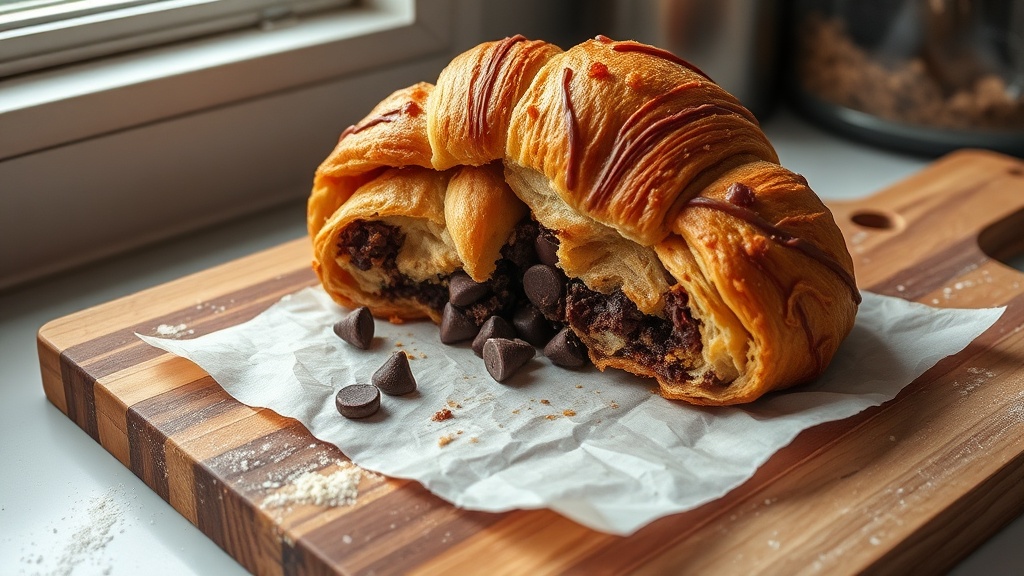
It came out of the oven looking like a cover shot. Golden croissant dough peeking through a crackled cookie top, crisp layers visible from the side, the right amount of ooze where the chocolate pooled. I was so proud I actually took a video of the cross-section cut.
Then I tasted it. Dense. Bready. The cookie dough had merged with the lamination into a single chewy slab that tasted vaguely like sadness. The butter had migrated. The layers collapsed. It looked like a crookie and had the soul of a hockey puck.
That batch went in the bin. I went back to my notes.
And that's really the story of texture mashups in 2026: they look incredible everywhere, they're legitimately delicious when done right, and most first attempts are a disaster because people treat them like a mix-and-match situation instead of a technique problem. So let me give you the actual technique.
Why Mashups Fail (And It's Not What You Think)
When you combine two pastry structures, you're putting gluten under dual stress. Croissant dough wants to relax, spread, puff — it needs cold butter pockets and hot oven air to separate those layers. Cookie dough wants to melt and set — it needs butter to spread, then sugars to firm up. Put them together wrong and they compete instead of complement.
The three failure modes I see constantly:
Moisture migration. Wet fillings (jam, custard, anything with high water content) will steam into the surrounding dough during baking. That steam collapses lamination. If your cruffin filling is too loose, you lose the flaky layers you worked so hard for.
Temperature windows missed. Croissant dough needs to stay cold right up until it hits a hot oven. Cookie dough needs to not be so cold it won't spread. These windows conflict. You have to work fast.
Order of operations errors. The thing that took me from bad crookies to good ones: cookie dough goes on top of laminated dough, not mixed in. They bake together but stay structurally separate until the oven does the merging work. Same with cruffin fillings — they live in the center spiral, not mixed through the dough.
My Popo always said you layer flavors with purpose, not by accident. Turns out that applies to gluten structure too.
The Crookie: What's Actually Happening
A crookie is croissant dough with cookie dough baked on top (or sandwiched inside, depending on which bakery started the version you're copying). The version that actually works:
What you need structurally: laminated croissant dough (made from scratch, or see the Quick Wins section below for a better starting point if you're not ready for that), and a cookie dough that's slightly underdeveloped in mixing.
One thing I want to flag before we get into it: crescent roll dough from a can is not a substitute for laminated croissant dough. I know this gets recommended as a shortcut everywhere, but they're structurally different products. Crescent dough uses chemical leavening; its "layers" won't behave like butter-laminated layers in the oven, and you'll learn the wrong things from the result. If you want a genuine stepping-stone, puff pastry is a better approximation — I cover that option below.
Here's the technique logic: undermix your cookie dough. I know. It feels wrong. But if your cookie dough is fully mixed to the point of smooth and ribbon-like, it will spread too aggressively in the oven and pull moisture into the lamination layers. Mix until the flour just disappears. Leave it a little rough. This is one of the rare times underdevelopment is correct.
Temperature control: Your laminated dough should be cold — work at it for no more than 10-12 minutes before it goes back in the fridge for 15 minutes. The cold butter is your lamination. Let it warm up and you've lost the game before the oven.
Assembly: Roll out your laminated dough to about 4mm. Add a layer of cookie dough across the center third. Fold the outer thirds over (like a letter fold), press gently, then cut into portions. The cookie dough is now inside the lamination, and it will expand into the layers during baking.
Baking: Hot oven, 400°F (205°C). I'm typically in the 18–22 minute range, but watch the cookie top rather than the clock — when it cracks and looks set, you're done even if you're nervous. Pull it. Thicker crookies and denser cookie doughs may need a couple more minutes.
Common mistakes I still see:
- Spreading cookie dough all the way to the edges (butter leakage + sealed edges that don't puff)
- Using cold butter in cookie dough (it won't spread into the layers correctly)
- Under-baking because the outside looks done — the middle of a crookie needs that full time
The Cruffin: Proof That Muffin Tins Are Underrated
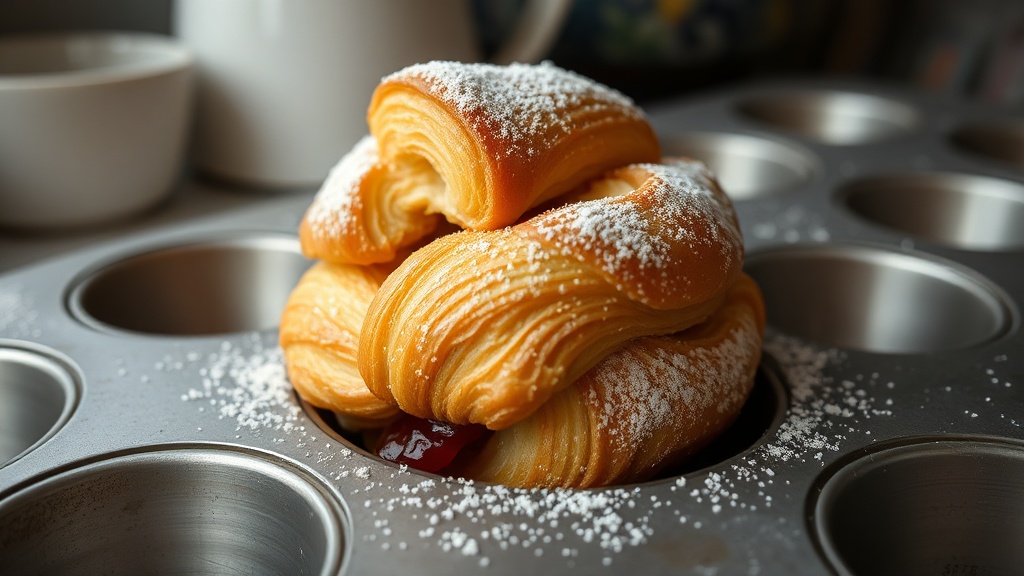
A cruffin is croissant dough rolled with filling, coiled into a muffin cup, and proofed until it becomes this ridiculous layered puff tower. The technique is actually more forgiving than crookies because the structural work is done by the muffin tin holding the shape.
The roll: After your final fold on laminated dough, roll it out thin — about 3mm. Add your filling to the surface, leaving a 1cm border on the long edges. Roll it lengthwise into a tight log, then cut the log lengthwise down the center (so you can see the layers and filling exposed). Coil that cut strip, cut-side up, into a greased standard muffin cup.
Fill-to-dough ratio: This is where most people go wrong. In my experience, somewhere around 2-3 tablespoons of filling per cruffin is the ceiling — but this depends on how moist your filling is and how thick you've rolled your dough. The principle is: treat filling as flavoring, not stuffing. More moisture = more steam = collapsed layers.
Proofing: This is temperature-dependent and recipe-dependent in a way that's hard to pin down exactly, which used to frustrate me. As a rough reference: at around 70°F room temp, a standard laminated dough might take 2–2.5 hours; at 75°F, closer to 90 minutes — but your specific formula matters, so use visual cues over the clock. Don't rush proofing with added heat — it melts the butter. The cruffin is ready to bake when the dough has puffed above the rim of the muffin cup and jiggles slightly when you move the tin.
Overbaking vs. underbaking: Cruffins underbake more often than they overbake because the outside looks done when the center layers are still doughy. If you're not sure, add 5 minutes. A slightly overdone crust is preferable to a raw spiral center. I bake at 375°F (190°C) for 25–30 minutes — adjust for your oven and your dough's thickness.
Spring Flavor Engineering: What Works and Why
This is the fun part. The flavors I keep reaching for right now — strawberry, lavender cream, honey, brown butter — happen to be all over spring menus and bakery cases at the moment, and they also behave very differently inside a mashup. Which is convenient, because I can explain why some work and others need adjusting.
Strawberry jam: The problem with jam is free water. Good jam for cruffins and crookies needs to be reduced further than you'd use it for toast — it should hold a shape on a cold plate, not pool. Cook your jam down until it passes the "wrinkle test" (put a spoonful on a cold plate, push it with your finger — it should wrinkle, not slide). Loose jam = steam = collapsed layers.
Lavender cream: Cream cheese-based fillings are ideal for mashups because cream cheese has body and low free moisture. Mix room-temperature cream cheese with a little honey and dried lavender (a little goes so far — err on the side of less). This holds structure in the oven without releasing moisture. Spring winner.
Brown butter caramel: Brown butter adds a nutty body that integrates into laminated dough beautifully. Use it combined with a little powdered sugar and salt to make a thick paste rather than a liquid caramel — liquid caramel in cruffin filling will turn into a sticky mess. The paste version stays put.
Honey: Add it to fillings as a component, not the main ingredient. Straight honey at high oven temps will caramelize into something harsh. Mixed with cream cheese or brown butter as a sweetener, it adds complexity without taking over.
Quick Wins If You're Not Ready for Full Lamination
Full laminated croissant dough from scratch is a multi-day project. If you're newer to baking or just want to start exploring texture mashups without a weekend commitment:
The waffle sandwich hybrid: Make a standard Belgian waffle batter and your favorite pastry cream. Bake the waffles, let them cool completely, then sandwich with pastry cream (or whipped cream cheese, or strawberry jam that's passed the wrinkle test). Serve immediately — waffles soften fast. This gives you the textural contrast experience without lamination complexity.
Puff pastry + cookie dough: Use store-bought puff pastry — this is butter-laminated like croissant dough, just without the yeast, so it's a much more honest approximation than crescent roll dough. Add a small amount of chocolate chip cookie dough to the center before folding. The puff pastry lifts around the cookie dough and you get a genuine approximation of the crookie layering experience with a fraction of the effort. Good for understanding what you're actually aiming at before you commit to a full laminated dough project.
These aren't cop-outs. They're how you learn what the texture goal actually feels like in your mouth, so you know what you're working toward when you take on the real thing.
Gear Reality Check
I want to address something because I see a lot of "what tools do you need for crookies and cruffins" questions with answers that make me tired.
You need: a standard 12-cup muffin tin, parchment paper, a bench scraper (best $10 you'll spend in your baking life), and a rolling pin. That's it.
You do not need: a specialty pastry roller, a croissant cutter (literally just use a knife), silicone muffin molds marketed as "cruffin-specific," or a lamination board (your counter, lightly floured, is a lamination board).
The trend content around mashups is pushing a lot of gear. Ignore it. The technique is in your hands and the temperature of your kitchen, not your equipment.
The crookie I threw in the bin was the most useful thing I baked that week. The batch I made the following day — undermixed dough, cold lamination, hot oven — was genuinely one of my favorite things I've made this year. That's the texture mashup arc. One disaster, then understanding why, then something that actually tastes better than either component alone.
That's worth the hockey puck.
Happy baking, happy hybriding.
— Emma