The Women Who Taught Me to Bake: Celebrating Female Bakers This International Women's Day
Every single thing I know about baking starts with a woman.
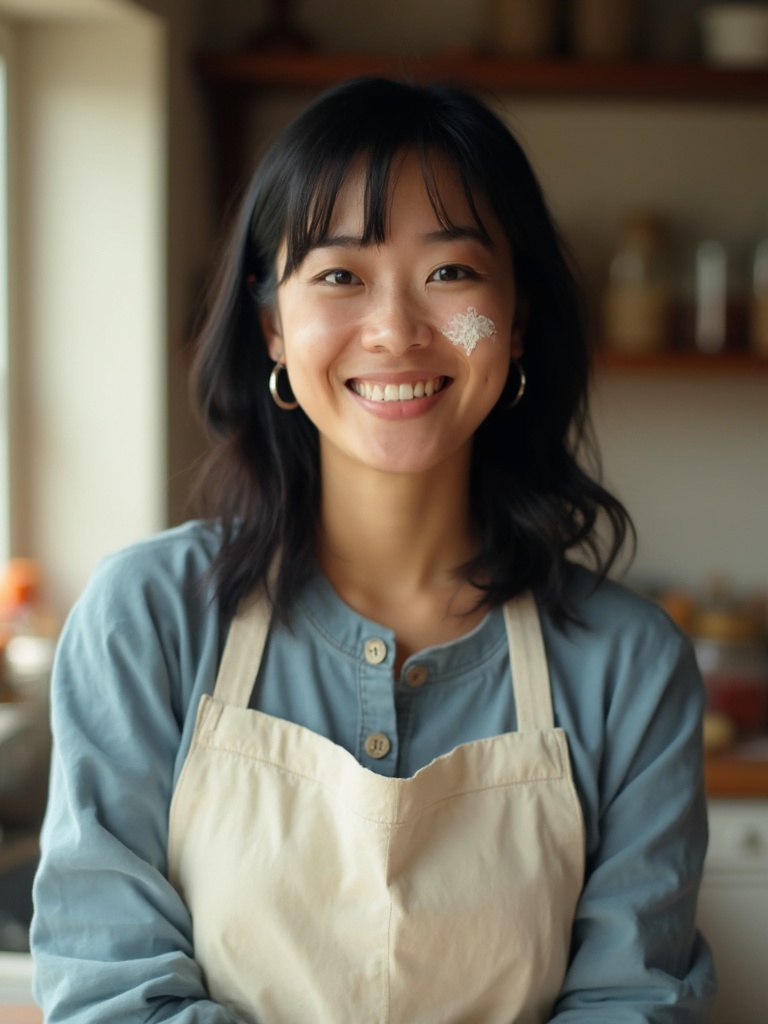
My Popo (grandmother) — tiny, fast-moving, always with flour somewhere on her forearms — could produce a tray of char siu bao seemingly from thin air. She never used a recipe. She'd pinch a bit of dough, feel it, and just know. As a kid I assumed everyone's grandmother did this. It was only in college, watching friends nuke frozen burritos at 11pm, that I realized: I'd been given something rare.
This International Women's Day, I've been sitting with that. How many of us learned to bake from a woman? A grandmother, a mother, an aunt, a teacher? And how many brilliant women in professional baking still have to fight for the same recognition their male counterparts get handed on a silver (fondant-covered) platter?
I have a lot of feelings about this. Let me share them.
The Women Who Actually Built Modern Baking
Let's be honest: baking has always been women's work — but the credit hasn't always followed.
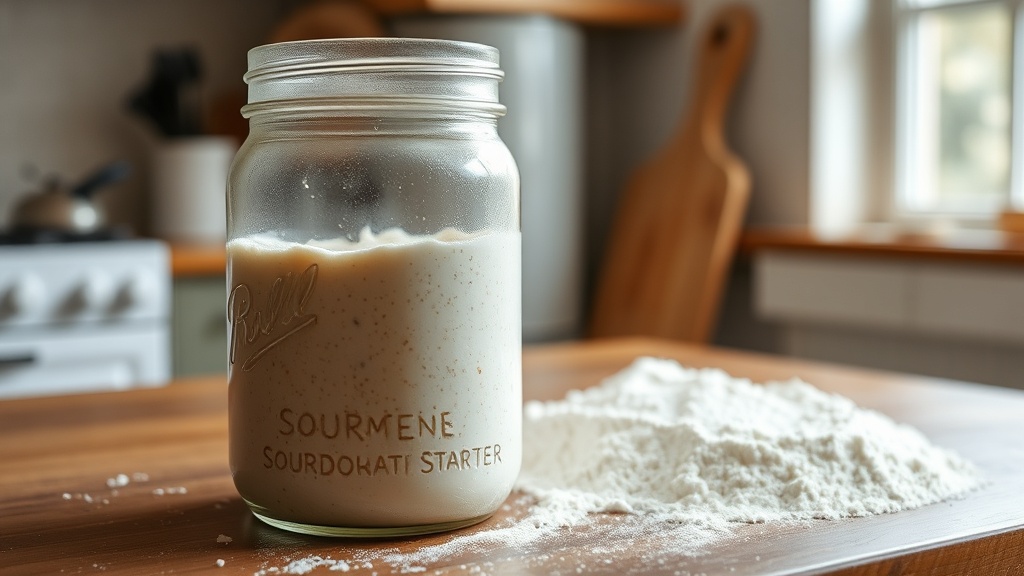
When I first got serious about sourdough, the baker I kept coming back to was Nancy Silverton. She launched La Brea Bakery in Los Angeles in 1989 at a time when artisan bread in America was... not a thing. She built her starter from wild-captured yeasts and is widely credited with helping ignite the American artisan bread movement that your Instagram feed is now drowning in. Every bougie bread baker you see today? Owes a spiritual debt to Nancy Silverton. (If Silverton's story inspires you, I have the 3 bread recipes to start with that'll build your confidence from day one.)
Then there's Joanne Chang of Flour Bakery in Boston. Her sticky buns are genuinely life-changing (I've made them three times; I'm not sorry). But beyond the recipes, she wrote Flour and Baking with Less Sugar in a way that actually explains the why behind baking chemistry — the deep flavor science that separates good baking from great. She treats home bakers like intelligent adults. That's rarer than it sounds.
And Christina Tosi of Milk Bar — whether or not you're a cereal-milk soft serve devotee, you have to respect what she built. She took American nostalgia food (birthday cake, corn, Lucky Charms) and turned it into something genuinely creative and technical. She also talks openly about the intensity of professional pastry kitchens in a way that demystifies the industry.
I could keep going. Rose Levy Beranbaum wrote The Cake Bible in 1988 and it is still the most scientifically rigorous baking book I own. Gesine Bullock-Prado left a career in Hollywood to open a pastry shop in Vermont and has been teaching people European pastry techniques through YouTube and books ever since. Vallery Lomas won The Great American Baking Show... and then ABC pulled her entire finale from airing due to a harassment investigation involving a judge on the show. Her win was never broadcast. (Still furious about that, by the way.)
These are just the ones who made it far enough to be visible. Which brings me to the part that makes me feel things.
What We Don't Talk About Enough
The baking industry — particularly at the professional/pastry chef level — has, from what I can observe, a complicated relationship with gender. Women have long dominated home baking, but from where I sit, the most celebrated, most-awarded pastry chef positions at high-end restaurants have historically skewed male. The "executive pastry chef" title? Often a man. The woman who trained him? Often invisible.
I'm not trying to make this a downer post. I genuinely believe things are shifting. Social media has absolutely changed the equation — you no longer need a TV deal or a cookbook contract to build an audience. Women like Sarah Kieffer (of pan-banging cookie fame) built enormous followings by just being excellent and honest online. That's the path I'm trying to walk too, even on a much smaller scale.
But I do think it's worth naming: when we celebrate baking, we should be actively celebrating the women who've always been at the center of it. Not just on International Women's Day. Always.
Popo's Egg Tarts (Dan Tat) — As Best As I've Reconstructed Them
Okay. Here's where I get emotional.
My Popo passed away four years ago. She never wrote down a single recipe. I've spent the last two years trying to reverse-engineer her egg tarts from memory, from taste, from calling my mom and asking things like "wait, did she use lard or butter?" (Answer: lard. Popo did not mess around.)
These are not a perfect replica. They never will be. But they're close enough that when my mom ate one last Lunar New Year, she got quiet for a second and then said "that's right."
That's the whole goal.
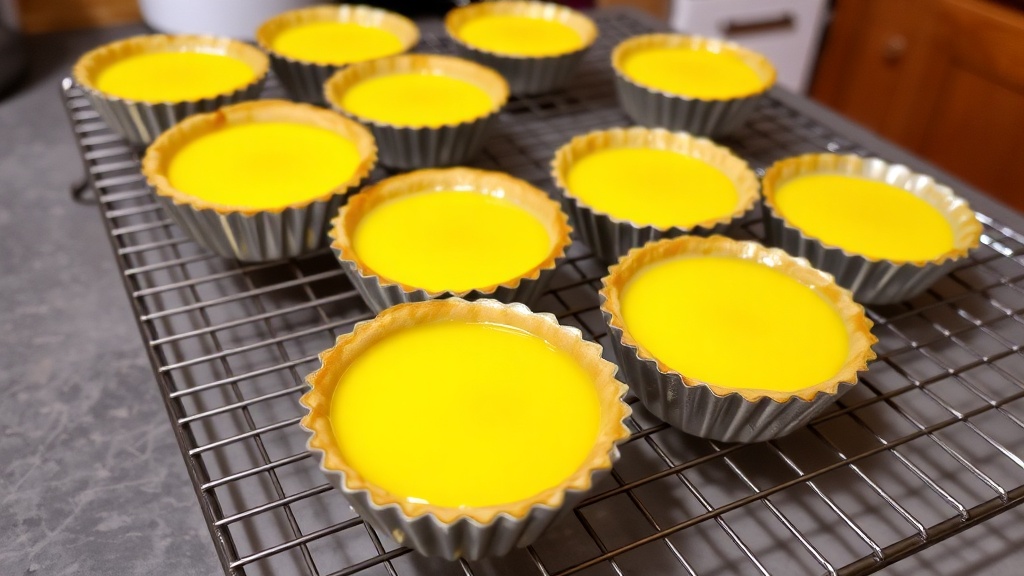
Makes 12 tarts
For the pastry shell:
- 1 cup all-purpose flour
- 1/4 cup icing sugar (not granulated — this matters for texture)
- 1/2 cup cold lard, cut into small cubes (cold butter works, but lard gives a better flake)
- 1 egg yolk
- 1–2 tbsp cold water
For the custard filling:
- 3 eggs
- 1/3 cup sugar
- 3/4 cup warm water
- 1/4 cup evaporated milk
- 1/2 tsp vanilla extract
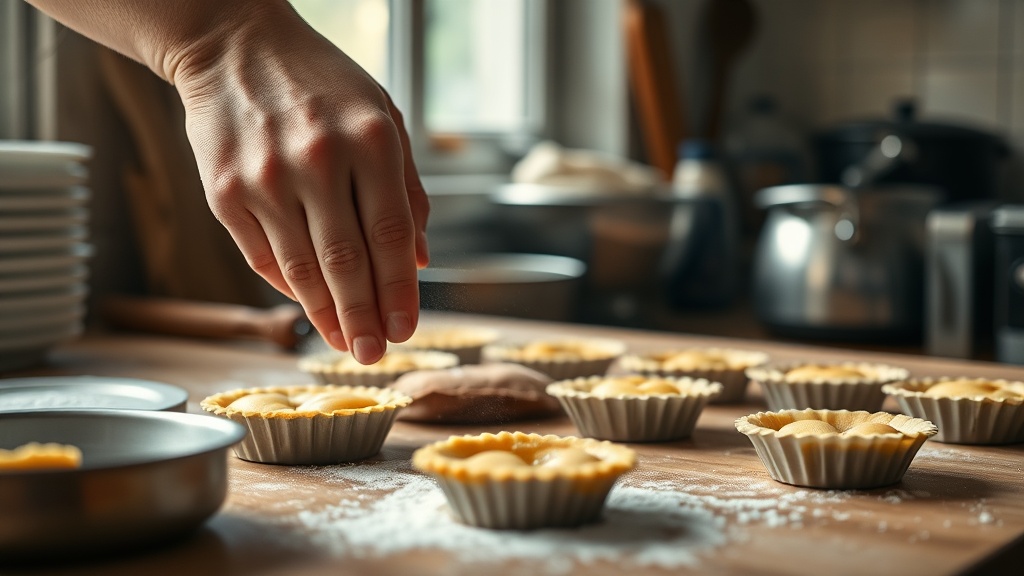
Make the pastry: Combine flour and icing sugar. Cut in cold lard with your fingers until it resembles rough breadcrumbs — you want some pea-sized pieces remaining. Add the egg yolk and 1 tbsp cold water; mix until just combined. Do not overwork this dough. It'll feel crumbly and that's fine. Press it together, wrap in plastic, and chill for 30 minutes.
Prep the custard: Dissolve sugar in the warm water. Let it cool to room temperature (don't pour hot liquid onto eggs — this is not a shortcut worth taking). Whisk eggs lightly. Add the sugar water, evaporated milk, and vanilla. Strain through a fine mesh sieve. This step is non-negotiable — straining is what gives you silky custard instead of something weirdly textured.
Assemble: Preheat oven to 375°F (190°C). Press pastry into a greased 12-cup tart pan or individual tart molds — about 1/8 inch thickness. Pour custard to 3/4 full. Bake 20–22 minutes until custard is just set with a slight wobble in the center. It'll firm up as it cools.
Eat warm if at all possible. Room temperature is acceptable. Cold from the fridge is fine but a minor crime.
The Voices I'm Learning From Right Now
Since I'm always on the lookout for new baking perspectives:
Cynthia Chen McTernan of Two Red Bowls writes about Asian-American baking with so much warmth it honestly makes me want to cry. Erin McDowell is probably the clearest explainer of baking science working today — her book The Fearless Baker should be in every beginner's collection. And Paola Velez, a Dominican-American pastry chef who co-founded Bakers Against Racism, has done more for community baking in a few years than most people do in a career.
These women aren't just making good food. They're changing what baking looks like, and who it belongs to.
To Every Woman Who Taught Someone to Bake
If you're reading this and you learned to bake from a woman — your grandmother, your mother, a neighbor, a teacher — I hope you've told her what that meant to you. And if she's no longer here to hear it, I hope you're carrying her recipes forward.
That's what all of this is, ultimately. Not aesthetics. Not content. Not "building a personal brand." It's passing something forward.
Happy International Women's Day. Go bake something that matters.
— Emma