Why Your Cast Iron Skillet Makes the Best Skillet Cookies

Many bakers believe that a standard 9x13 baking pan or a rimmed cookie sheet is the only way to achieve the perfect cookie texture, but this is a misconception that limits your results. If you want a cookie that features a crispy, caramelized edge paired with a soft, gooey center, a cast iron skillet is actually your most effective tool. This guide explains the science behind why cast iron works, how to prep your skillet to avoid sticking, and the technical adjustments you need to make to your dough to ensure success.
The Science of Heat Distribution in Cast Iron
The primary reason a cast iron skillet produces a superior cookie compared to a thin aluminum baking sheet is thermal mass. Aluminum heats up quickly but loses heat just as fast. Cast iron, however, is dense and holds a massive amount of thermal energy. When you place a cold or room-temperature dough into a preheated cast iron skillet, the pan provides a steady, intense heat that immediately begins the caramelization process on the bottom and sides of the cookie.
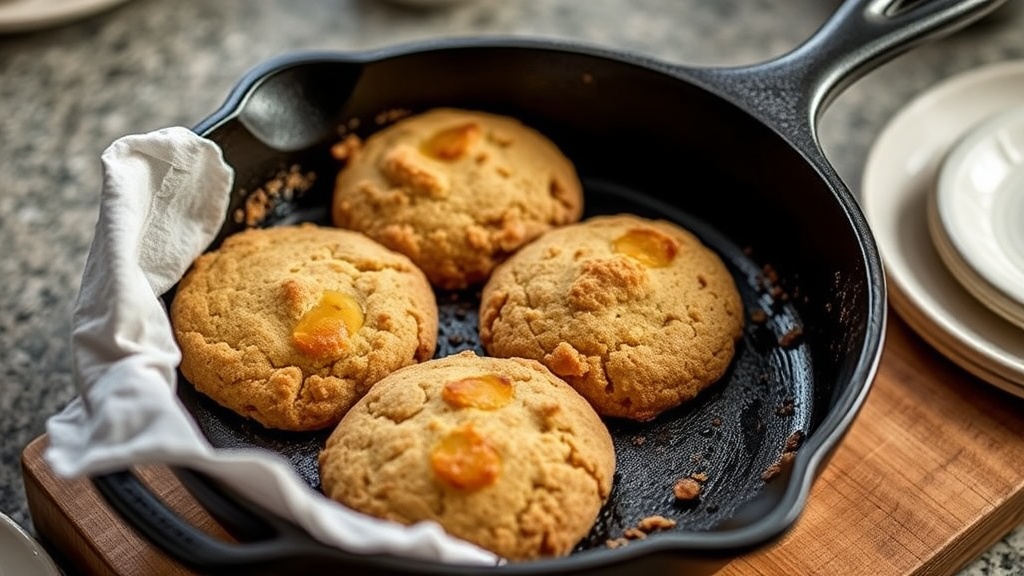
This intense heat triggers the Maillard reaction—the chemical reaction between amino acids and reducing sugars that gives browned foods their distinctive flavor—much more effectively than a standard sheet pan. Because the skillet retains heat so well, the edges of your cookie become deeply golden and slightly crunchy, creating a structural "crust" that supports the softer, underbaked center. This contrast in textures is the hallmark of a professional-grade skillet cookie.
Why Thermal Mass Matters for Your Dough
When you bake on a standard cookie sheet, the heat is often inconsistent, leading to cookies that might be overbaked on the bottom but undercooked in the middle. In a skillet, the heat is omnidirectional. The heavy walls of the pan act as a heat reservoir, ensuring that the edges of the dough are cooked through with consistent pressure. This is particularly helpful if you are making a thicker dough, as the cast iron helps penetrate the center of the mass without burning the exterior too quickly.
Preparing Your Skillet for Success
One of the biggest fears home bakers have when using cast iron is the "stick factor." If you aren't careful, your beautiful cookie will become a single, inseparable mass stuck to the bottom of your pan. To prevent this, you must treat your skillet with the same respect you would a non-stick pan, but with a few specific additions.
There are three reliable methods to ensure your skillet cookie releases cleanly:
- The Butter and Flour Method: This is the classic approach. Melt a tablespoon of unsalted butter (such as Kerrygold for extra flavor) and brush it liberally around the bottom and up the sides of the skillet. Dust with a small amount of all-purpose flour, tapping out the excess.
- The Oil Method: For a slightly crispier bottom, use a neutral oil with a high smoke point, like grapeseed or canola oil. This is especially effective if your dough is particularly high in sugar, as sugar can act like glue.
- Parchment Paper Lining: If you want zero risk, line the bottom and sides with a circle of parchment paper. This is the most foolproof method, though you may lose a tiny bit of that direct-heat caramelization on the very edges.
If you find that your cookies are consistently sticking or losing their shape, you might be dealing with an issue with your dough's hydration or fat content. If you are curious about why your dough might be losing its structure, check out my guide on why your cookies are spreading too much.
Essential Adjustments for Skillet Cookie Dough
You cannot simply take a standard batch of chocolate chip cookie dough and expect it to behave perfectly in a skillet without a few minor adjustments. Because the skillet provides more intense, sustained heat, you need to account for how that affects the dough's structure and moisture.
1. Temperature of the Ingredients
When using cast iron, I highly recommend using room-temperature butter and eggs. If you use cold ingredients, the thermal mass of the skillet might struggle to bring the center of the cookie up to temperature before the edges become too dark. For the best results, ensure your butter is soft enough that a finger leaves an indentation, but not so soft that it is oily.
2. Flour Measurement Accuracy
In a heavy skillet, the weight of the dough is more concentrated. If your flour measurement is even slightly off, the cookie can become either too dense (if too much flour) or too greasy (if too little). I always recommend using a digital scale for precision, but if you are using volume, ensure you are using the spoon and level method to avoid packing the flour too tightly into your measuring cup.
3. Managing the Bake Time
Skillet cookies often require a slightly different baking window than individual cookies. Because you are baking a single, large mass, the edges will cook significantly faster than the center. To prevent a "raw" center, you may need to bake the skillet for an additional 3 to 5 minutes compared to a standard recipe. However, keep a close eye on the edges; if they are turning a deep mahogany color while the center is still pale, tent the skillet loosely with aluminum foil to protect the edges from burning.
Step-by-Step Guide to the Perfect Skillet Cookie
Follow these steps to ensure a consistent result every time you reach for your cast iron.
- Preheat the Skillet: For the ultimate crispy edge, place your empty, greased skillet into the oven while it preheats to 350°F (175°C). Adding dough to a hot pan mimics the "pan-frying" effect and creates an immediate crust.
- Prepare the Dough: Mix your dough as per your favorite recipe. I recommend a dough with a high ratio of brown sugar to granulated sugar, as the molasses in brown sugar aids in that chewy texture.
- Add the Dough to the Hot Skillet: Carefully remove the hot skillet from the oven using heavy-duty oven mitts. Drop your dough into the pan, spreading it out toward the edges, but leaving a small gap (about half an inch) as the dough will spread as it hits the heat.
- Bake and Monitor: Place the skillet back in the oven. Bake for 20-25 minutes. Use a spatula to gently push the dough toward the edges halfway through the baking time to ensure the edges are being coated in the melted butter/oil.
- The Carryover Cook: This is the most important step. Remove the skillet from the oven when the edges are golden and the center still looks slightly "wet" or underdone. The residual heat from the cast iron will continue to cook the center of the cookie for 10-15 minutes while it sits on the counter.
Troubleshooting Common Skillet Cookie Issues
Even with a heavy skillet, things can go wrong. Here are the most common issues and how to fix them:
The center is a liquid mess: This usually happens if the skillet wasn't hot enough when the dough was added, or if you baked it for too short a time. Ensure you are letting the cookie rest in the pan for at least 10 minutes before attempting to serve it. The "carryover cooking" is not a suggestion; it is a requirement for a skillet cookie.
The edges are burnt, but the middle is raw: This is a sign of uneven heat or a skillet that is too thin. If you are using a lower-quality cast iron, you may need to lower your oven temperature by 25°F and increase the bake time. You can also use the aluminum foil tenting method mentioned earlier.
The cookie is too dense and heavy: This is often a result of over-mixing the flour. When you add flour to wet ingredients, you begin developing gluten. In a heavy skillet, excessive gluten creates a bread-like texture rather than a cookie texture. Mix your dry ingredients into the wet ingredients just until no white streaks remain.
"The secret to a great skillet cookie isn't just the recipe; it's respecting the heat of the pan. Let the cast iron do the heavy lifting by providing the heat, and let the carryover cooking do the delicate work of setting the center."
Using a cast iron skillet turns a simple dessert into a structural masterpiece. By understanding the thermal properties of the pan and adjusting your technique accordingly, you can move beyond standard cookies and create something truly impressive for your friends and family.