The Spoon and Level Method: How to Measure Flour Correctly Every Time

Quick Tip
Always spoon flour into your measuring cup and level with a knife instead of scooping directly from the bag to avoid using 25% too much flour.
Why Flour Measurement Matters
Incorrect flour measurement ranks among the top reasons home baking projects fail. When a recipe calls for 1 cup of flour, the difference between a properly measured cup and a scooped cup can exceed 30 grams—that's enough to transform a tender vanilla cake into a dry, crumbly disappointment or produce dense, heavy dinner rolls instead of light, airy ones. The spoon and level method solves this problem by ensuring consistent, accurate measurements every time.
The Problem with Scooping
Dipping a measuring cup directly into a flour bag compresses the flour, packing more into the cup than the recipe intends. King Arthur Baking Company tested this: one cup of spooned and leveled all-purpose flour weighs approximately 120 grams, while the same cup scooped directly from the bag weighs 150-160 grams. That extra 30-40 grams per cup accumulates quickly in recipes requiring 3-4 cups of flour.
Real-World Impact
Consider a standard chocolate chip cookie recipe calling for 2¼ cups flour. Scooping adds roughly 70 grams of excess flour—equivalent to an additional ½ cup. The result? Cookies that spread barely at all, turning out cakey and thick rather than chewy with crisp edges. In yeast breads, excess flour prevents proper gluten development, yielding loaves with tight, dry crumbs instead of the open, springy texture bakers want.
How to Spoon and Level
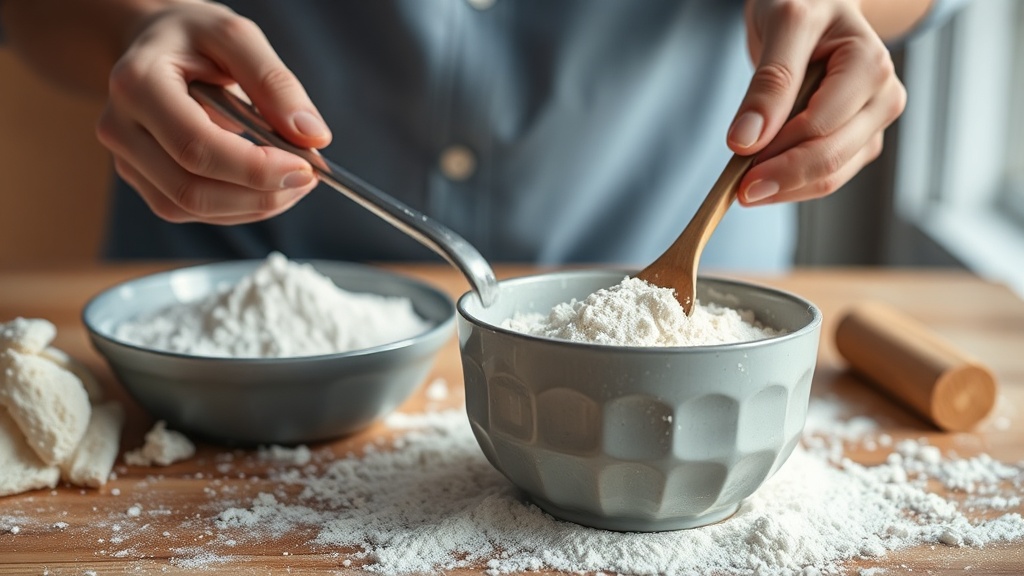
- Fluff the flour. Use a spoon to stir the flour in its container, aerating it and breaking up any compacted areas.
- Spoon into the cup. Scoop flour with a spoon and sprinkle it into the measuring cup until the flour mound exceeds the rim. Do not shake or tap the cup—this settles the flour and creates packing.
- Level with a straight edge. Hold a butter knife or bench scraper across the cup's rim and sweep away the excess in one smooth motion.
When Precision Matters Most
The spoon and level method becomes critical in recipes with high flour-to-liquid ratios. Angel food cakes, shortbread cookies, and sandwich bread depend on exact flour proportions. For rustic recipes like banana bread or fruit muffins, small measurement variations cause less trouble—these items tolerate some density.
Weighing: The Gold Standard
For absolute consistency, use a digital kitchen scale. One cup of spooned and leveled all-purpose flour equals 120 grams. Whole wheat flour weighs slightly more at 128 grams per cup. Bread flour typically hits 127-130 grams. Weighing eliminates guesswork entirely.
Quick Reference
- All-purpose flour: 120g per cup (spooned and leveled)
- Bread flour: 127-130g per cup
- Whole wheat flour: 128g per cup
- Cake flour: 110-115g per cup
Adopting the spoon and level method takes an extra 30 seconds and transforms baking results. Cakes bake with proper moisture, cookies spread correctly, and bread develops the intended texture. Small habits create significant improvements in the kitchen.