
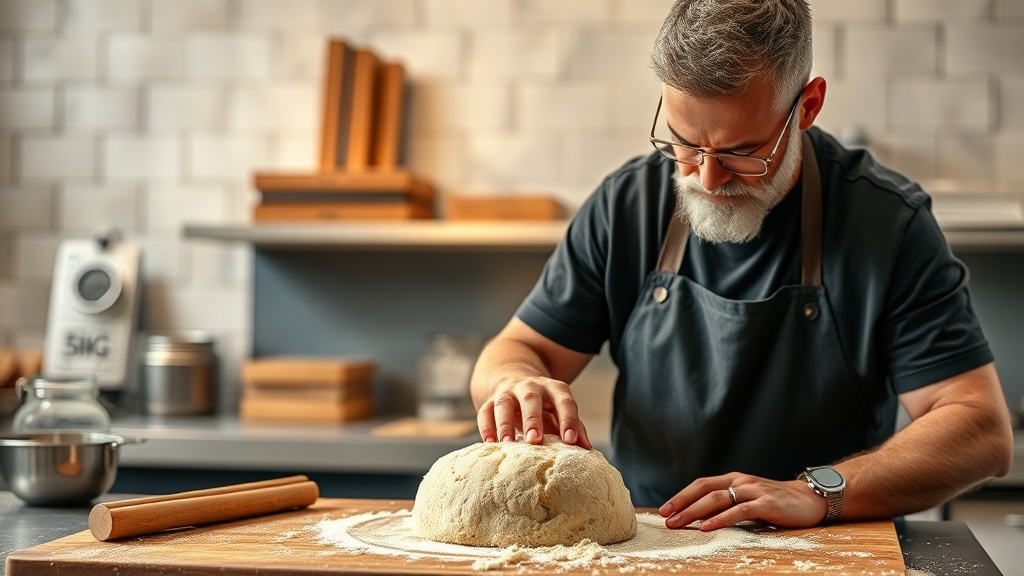
Get the Perfect Crumb with Temperature Controlled Water

Did you know that a difference of just five degrees in your water temperature can be the difference between a bubbly, airy sourdough loaf and a dense, heavy brick? Most home bakers focus entirely on flour quality or hydration levels, but they overlook the most basic variable in the mixing bowl. This post breaks down exactly how to use temperature-controlled water to control your fermentation, manage dough strength, and achieve that elusive, open crumb structure every single time.
Why Does Water Temperature Matter in Bread Making?
Water temperature dictates the speed of yeast activity and the development of gluten structure during the initial mixing stages. When you use water that is too hot, you risk killing your yeast or wildly accelerating fermentation before the gluten is strong enough to hold the gas. If the water is too cold, your dough might sit sluggishly for hours, leading to a gummy interior. It's all about finding the sweet spot where the biology of the dough meets the physics of the structure.
Think of your dough like a living thing. It responds to its environment. If you've ever wondered why your bread crust is too tough or the crumb is unappealing, look at your temperature logs. Often, the issue isn't the recipe; it's the thermal energy you introduced at the start.
I remember my first "fail" with sourdough. I used warm tap water because I thought it would make the process faster. Instead, I ended up with a fermented mess that smelled like vinegar and had zero lift. I learned the hard way that speed isn't the goal—control is.
How Do I Calculate Desired Dough Temperature?
You calculate Desired Dough Temperature (DDT) by taking your target temperature, subtracting the ambient room temperature, and then subtracting the flour temperature. This math tells you exactly how much you need to adjust your water temperature to hit your goal. Most professional bakers aim for a final dough temperature between 75°F and 78°F for sourdough, or slightly higher for commercial yeast breads.
Here is a simple formula you can use on your phone's calculator:
- Identify your target: Let's say you want a 77°F dough.
- Check the room: If your kitchen is 72°F, note that.
- Check the flour: Feel your bag of King Arthur Bread Flour. If it's sitting in a cool pantry, it might be 68°F.
- The Math: (Target 77) - (Room 72) - (Flour 68) = -63. This number might look weird, but it tells you how to adjust.
Wait, that math is a bit simplified. A more accurate way to look at it is: Water Temp = (DDT x 3) - (Room Temp + Flour Temp).
Let's try that again with a real example. If you want a 78°F dough, and your room is 70°F and your flour is 70°F: (78 x 3) = 234. Then, 234 - 70 - 70 = 94. You need 94°F water to hit your goal. It's a bit of a brain-bender at first, but once you do it a few times, it becomes second nature.
The Role of Water Temperature in Gluten Development
Temperature affects how much the proteins in your flour can bond. Warm water (around 85-90°F) can actually help the hydration process feel "faster" because it softens the starches, but if you go too high, you'll get a sticky, unmanageable mess. I've seen people use the Wikipedia entry on gluten to understand the science, and it's true—heat increases molecular motion. In baking, that means more movement, more reaction, and more potential for error if you aren't careful.
If you're working with high-protein flours, they can handle a bit more heat, but for delicate pastry or low-protein doughs, keep it cool. A thermometer is your best friend here.
| Water Temperature | Expected Dough Result | Best Used For... |
|---|---|---|
| Cold (50°F - 60°F) | Slow, controlled fermentation | Long, room-temperature fermentations |
| Room Temp (70°F - 75°F) | Standard development | Most beginner sourdough recipes |
| Warm (80°F - 90°F) | Rapid yeast activity | Quick bread recipes or cold-room environments |
| Hot (Above 100°F) | Yeast death/Gluten breakdown | Avoid for sourdough! |
What Temperature Should I Use for Sourdough?
For most sourdough bakers, a final dough temperature of 76°F to 78°F is the "gold standard" for consistent results. This temperature allows the wild yeast and bacteria to work in harmony without the dough over-proofing too quickly. If you're baking in a hot kitchen during the summer, you'll likely need to use much cooler water—sometimes even iced water—to keep the dough from blowing out of control before you even get to the shaping stage.
I always keep a digital probe thermometer (I use a ThermoWorks thermometer) right on my counter. It's a small investment that prevents a lot of heartache. If you've already struggled with using cold eggs in your batter, you'll understand how temperature imbalances can throw off a recipe's chemistry.
A common mistake is assuming that "warm" water is always better. It isn't. If your water is too warm, the dough will feel very elastic and "alive" early on, but it will lose its structural integrity (and your crumb) very quickly. You'll end up with a flat loaf that looks like a pancake.
On the flip side, if you're baking in a cold garage or a basement, you might need to use slightly warmer water to jumpstart the process. Just be careful. You're balancing a fine line between a healthy ferment and a runaway fermentation that turns into a puddle of dough.
Why the "Feel" of the Dough Matters
While the numbers are great, your hands are also tools. If the dough feels tacky and overly soft, your water might have been too warm. If it feels stiff and unyielding, your water was likely too cold. This is where the art meets the science. I often tell my students that you can'ate the math, but you should trust the dough.
Using a digital scale to weigh your water is also a good habit. If you're measuring by volume (cups), you're adding another layer of error to an already complex process. A scale is much more precise.
One thing to remember: if you are using a sourdough starter, the temperature of that starter matters just as much as the water. If your starter is cold from the fridge, it will immediately pull the temperature of your dough down. I usually try to pull my starter out of the fridge a few hours before mixing so it's at room temperature.
If you find yourself constantly fighting with your dough's consistency, check your water temperature first. It's often the culprit behind "unpredictable" dough. Once you master the temperature, you'll feel like you've actually gained control over the process.
Don't be afraid to experiment. Try one batch with 75°F water and another with 85°F water using the same recipe. Seeing the difference in person is the best way to learn. It makes the science feel real, rather than just a bunch of numbers on a screen.
Steps
- 1
Test your water temperature
- 2
Adjust for yeast activity
- 3
Monitor dough temperature