
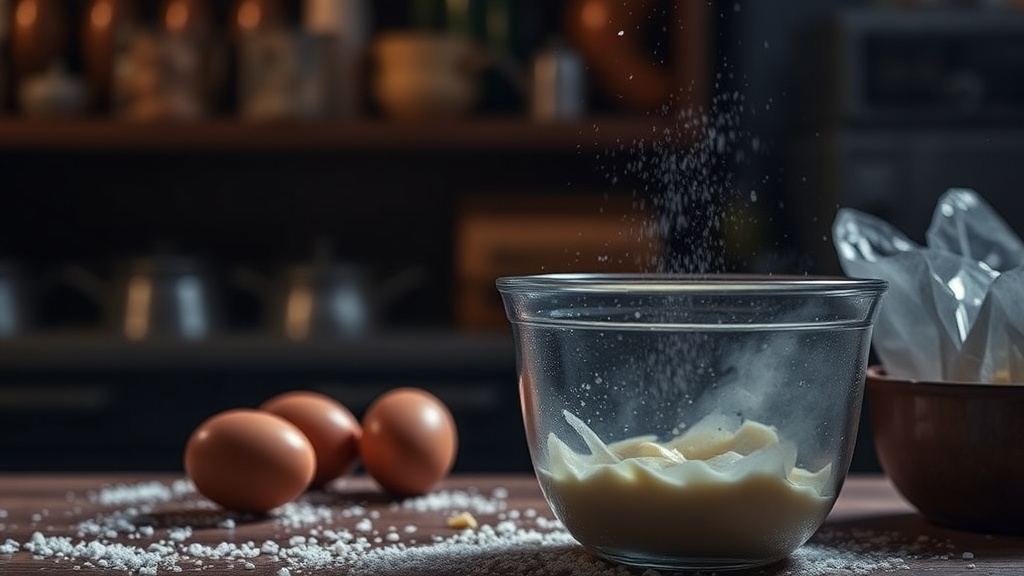
Stop Using Cold Eggs in Your Batter

Quick Tip
Always use room temperature eggs to ensure a stable emulsion and a smooth, voluminous batter.
Ever wonder why your cake batter looks curdled or your cookie dough seems broken even though you followed the recipe exactly? This usually happens because you used cold eggs straight from the refrigerator. Using room-temperature eggs ensures your fats and liquids emulsify—which is just a fancy way of saying they blend smoothly together—to create a consistent, stable structure in your baked goods.
Why should I use room temperature eggs?
Room temperature eggs allow the fats in your recipe, like butter or oil, to incorporate much more easily. When you drop a cold egg into creamed butter, the butter chills and solidifies (creating those tiny, unwanted clumps we all hate). This prevents the batter from becoming a smooth, cohesive emulsion. A well-emulsified batter is the foundation for a light, airy crumb in cakes and muffins.
If you're in a rush, don't panic. You don't need to wait hours for a carton of Eggland's Best to hit room temp. Here are a few quick ways to warm them up:
- The Warm Water Soak: Place your cold, whole eggs in a bowl of warm (not hot!) water for about 5 to 10 minutes.
- The Rapid Method: Wrap the eggs in a damp, warm paper towel and let them sit on the counter for a few minutes.
- The Microwave Trick: This is risky, so be careful. Place the egg in a bowl of warm water and microwave for just 10-15 seconds.
Worth noting: Never microwave a whole egg in its shell. It'll explode in your microwave—and your face—due to the pressure buildup inside. It's a mess you definitely don't want to clean up.
How can I tell if my batter is broken?
A broken batter looks grainy, curdled, or separated, often showing visible bits of fat that haven't fully blended with the liquid. This is a common issue in high-fat recipes like brioche or pound cakes. If you see the butter starting to separate from the flour and sugar, your emulsion has failed.
| Batter Appearance | Likely Cause | The Result |
|---|---|---|
| Grainy or Clumpy | Cold eggs or cold butter | Dense, heavy texture |
| Separated/Liquid Pools | Over-mixing or temperature shock | Collapsed structure |
| Smooth and Glossy | Properly emulsified ingredients | Light and fluffy crumb |
If you find your batters are often struggling, you might also want to check your dry ingredients. Sometimes, a lack of aeration in your flour can make a heavy batter feel even more "off." You can learn more about that in my post on why you should sift your dry ingredients together.
Does egg temperature affect bread?
Egg temperature affects bread primarily through the hydration and fat integration in enriched doughs. For recipes like brioche or challah, which rely heavily on eggs and butter, temperature is everything. If the eggs are too cold, the dough might feel stiff or struggle to develop a silky texture. For more on the science of ingredients, you can check out the Wikipedia page on eggs.
The catch? If you're making a lean dough—like a basic sourdough or a baguette—the temperature of the eggs matters much less since you're mostly dealing with flour, water, and salt. But for those decadent, enriched treats? Temperature is your best friend.