
Choosing the Right Salt for Your Sourdough and Pastries

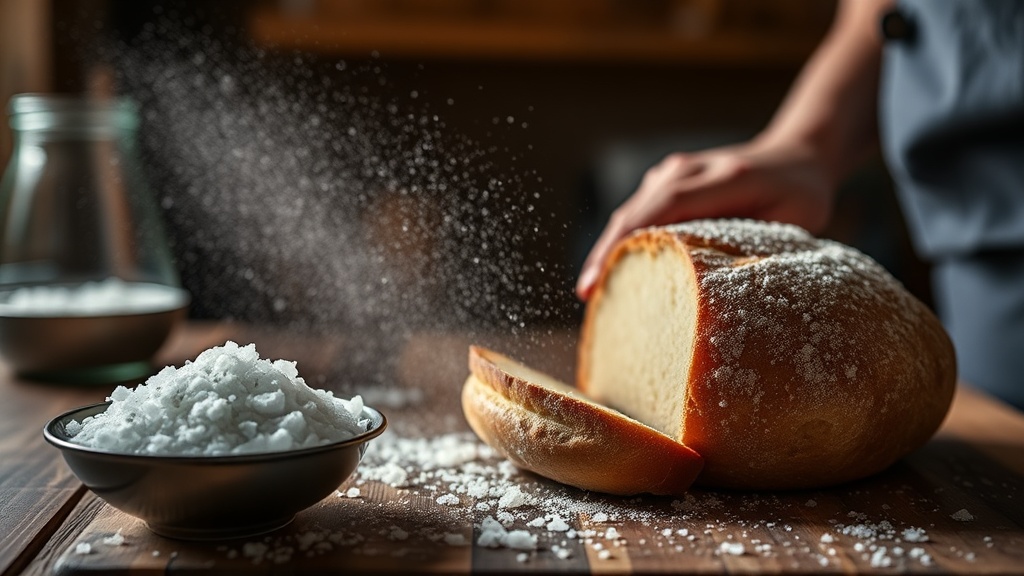
Imagine you've just pulled a beautiful, golden loaf of sourdough out of the oven. The crust looks perfect, the crumb is airy, but when you take that first bite, it tastes strangely flat—almost bland—or, even worse, it has a sharp, metallic aftertaste that lingers. This isn't a flour problem or a fermentation problem. It's a salt problem. This guide breaks down how different types of salt affect flavor, fermentation, and texture in your sourdough and pastry doughs so you can stop guessing and start baking with precision.
What is the difference between table salt and sea salt?
The primary difference between table salt and sea salt lies in the mineral content and the grain size, which directly impacts how much salt you're actually adding to your dough. Table salt is highly processed, incredibly fine, and often contains anti-caking agents like sodium chloride and even iodine. Because the crystals are so tiny, a single teaspoon of table salt is much more "salty" by volume than a teaspoon of coarse sea salt.
When you're working with sourdough, that distinction matters. If you use a fine sea salt like Maldon or even standard Diamond Crystal Kosher salt, the texture of your dough will feel different than if you used a heavy, iodized table salt. Table salt is great for precision, but it can sometimes leave a chemical-tasting finish if you aren't careful with your measurements.
I've found that using a high-quality sea salt provides a much cleaner flavor profile. It's not just about the saltiness; it's about the subtle mineral notes that complement the lactic acid in your sourdough. If you've ever wondered why your bread crust is too tough, sometimes a heavy hand with a coarse, unprocessed salt can lead to a harder, more brittle crust because of how the salt interacts with the gluten structure during the bake.
Here is a quick breakdown of common salts I keep in my pantry:
| Salt Type | Texture/Grain | Best Use Case | Flavor Profile |
|---|---|---|---|
| Table Salt | Fine/Powdery | Precision baking, heavy doughs | Sharp, consistent, slightly metallic |
| Kosher Salt (Diamond Crystal) | Large/Flaky | Sourdough, general bread making | Mild, clean, very versatile |
| Kosher Salt (Morton) | Dense/Granular | Pastries, heavy doughs | Stronger salt hit |
| Maldon Sea Salt | Large/Flaky | Finishing, topping bread | Bright, clean, crunchy |
Does salt affect sourdough fermentation?
Yes, salt directly slows down the fermentation process by regulating the activity of the yeast and bacteria in your starter. While a little salt is good for controlling the rate of fermentation, too much can actually inhibit the yeast, leading to a sluggish rise and a dense loaf.
Think of salt as the "brakes" for your dough. If your sourdough is rising too fast and blowing out through the sides of your proofing basket, a slightly higher salt percentage can help steady things. However, if you're a beginner, don't go overboard. Most sourdough recipes call for a salt percentage of about 2% of the total flour weight. This is the sweet spot where you get flavor without killing your wild yeast.
I once tried to speed up a sluggish starter by reducing the salt in my recipe, and the dough became a sticky, unmanageable mess. It turns out, salt helps strengthen the gluten network. Without it, the dough becomes too extensible—meaning it stretches too much without any resistance—and loses its structural integrity. If you're already struggling with dough structure, make sure you aren't scooping your flour incorrectly, as weight precision is vital for both flour and salt.
A little tip: if you're using a very active, liquid starter, the salt will feel even more important for maintaining that tension in the dough. It's a delicate balance, but once you get it, your loaves will have that professional, structured look.
Which salt is best for pastry dough?
For pastry dough, the best salt is usually a fine-grained sea salt or a high-quality Kosher salt that dissolves quickly and evenly into the fat and flour.
In pastry work—whether you're making a flaky pie crust or a delicate brioche—you want the salt to be invisible. You don't want a person biting into a croissant and hitting a giant, crunchy grain of salt. That's a "fail" in my book. You want the salt to enhance the butter and the sugar, not fight against them. This is why I prefer using a fine sea salt for my pastry doughs; it integrates seamlessly into the fats.
If you are making a sweet pastry, like a cinnamon roll or a sweet Danish, you might be tempted to use even less salt. But don't do that! Salt is what prevents the sugar from being cloying. It provides the contrast that makes the sweetness actually taste "deep" rather than just "sugary."
When I'm making something technical, like a puff pastry, I tend to stick to a very consistent, fine salt. It ensures that every single layer of dough has the same level of seasoning. If you use a coarse salt in a delicate pastry, you risk uneven pockets of saltiness that can ruin the texture of the bake.
- For Sweet Pastries: Use a fine sea salt to ensure it dissolves in the moisture of the dough.
- For Savory Pastries: A slightly coarser Koser salt can add a nice textural element if you're doing a topping.
- For Finishing: Always use Maldon or a similar flaky salt for that professional, crunchy finish on top of a warm loaf or cookie.
It's worth noting that different brands of salt have different "salinity" levels. For example, Morton Kosher salt is much denser and saltier by volume than Diamond Crystal Koser salt. If you swap one for the other without adjusting the weight, you'll end up with a very different result in your bake. Always use a digital scale for salt, not a measuring spoon, if you want to be truly consistent.
I've seen so many people get frustrated because their bread tastes "off," and it usually comes down to not weighing their salt. A tablespoon of one brand might be twice as salty as a tablespoon of another. It's a small detail, but it's the difference between a mediocre loaf and one that people actually want to come back for.
If you're finding that your dough is consistently too soft or isn't holding its shape, check your salt measurements. It might not just be your kneading technique. Sometimes, the chemistry of the salt is the real culprit behind a weak crumb or a collapsed loaf.
When you're working with sourdough, remember that the salt and the starter are in a constant tug-of-war. The starter wants to expand, and the salt wants to keep it in check. Finding that perfect equilibrium is what makes a baker truly skilled. It's a learning process, so don't be discouraged if your first few loaves aren't perfect—I certainly had plenty of "salty" failures when I started!