Why Your Sourdough Bubbles: Decoding Fermentation Magic

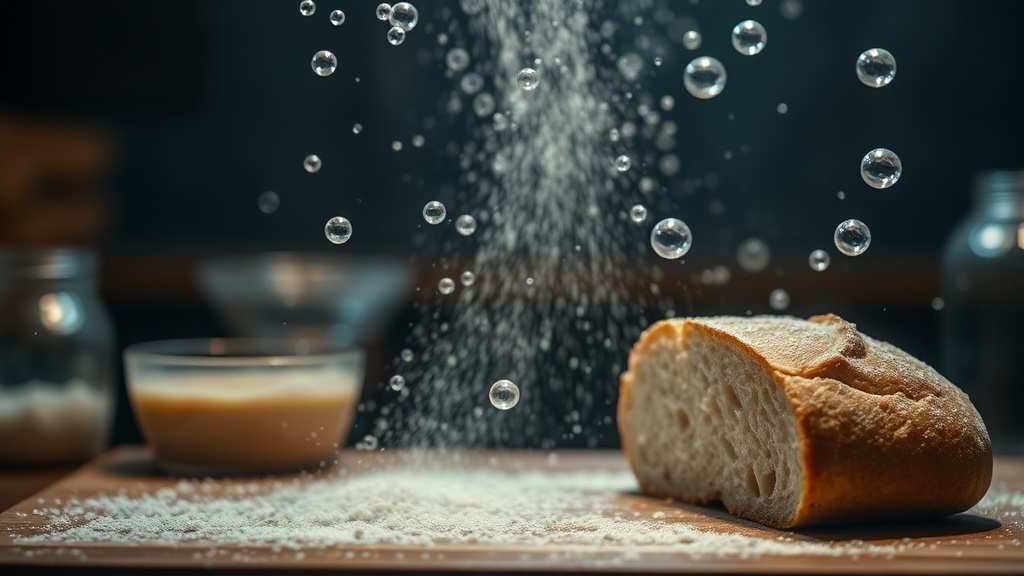
A single, translucent bubble clings to the side of a glass Weck jar, stretching thin like a soap film before popping to reveal a tiny crater in the creamy, pale beige expanse of the starter. The scent is unmistakable: a sharp, tangy brightness that hits the nose with a hint of fermented apple and yeast, a signal that the microscopic life within is actively breathing. This is the visual language of fermentation, a silent dialogue between wild yeast, lactic acid bacteria, and the flour you mixed hours ago.
To the uninitiated, a jar of bubbling sourdough starter can look like a science experiment gone wrong. You might see large, irregular holes or a fine, frothy texture and wonder if your culture is healthy or simply decomposing. Understanding these bubbles is the key to moving from following a recipe to truly understanding the science of fermentation. Those bubbles are not just aesthetic; they are the physical evidence of metabolic processes that determine the crumb structure, flavor profile, and shelf life of your final loaf.
The Microscopic Engine: Yeast vs. Bacteria
Inside your sourdough starter, two distinct groups of microorganisms are working in tandem. While we often use the term "sourdough" to describe the whole culture, the bubbles you see are the result of two different biological functions. The first is the wild yeast (primarily strains of Saccharomyces exiguus), which is responsible for the heavy lifting of gas production. The second is the Lactic Acid Bacteria (LAB), such as Lactobacillus, which focuses on acid production and flavor development.
The yeast consumes the sugars found in the flour—specifically the maltose—and converts them into ethanol and carbon dioxide (CO2). It is this CO2 that creates the physical bubbles. The bacteria, on the other hand, consume the same sugars but produce lactic and acetic acids. While the bacteria don't produce as much gas as the yeast, their presence is vital. They lower the pH of the dough, creating an acidic environment that protects the bread from "bad" bacteria and gives sourdough its signature tang. If you see a starter that is very bubbly but lacks a sour aroma, your yeast may be outperforming your bacteria, or your environment may be too warm.
The Role of Temperature in Bubble Formation
Temperature is the most significant lever you can pull to control the speed and type of fermentation. Just as a thermostat dictates the comfort of a room, temperature dictates the metabolic rate of your microorganisms. You can observe this through the size and frequency of the bubbles in your jar.
- Warm Temperatures (75°F - 85°F / 24°C - 29°C): At these temperatures, the yeast becomes highly active. You will see small, rapid-fire bubbles and a very fluid, almost liquid consistency. This promotes "lactic" fermentation, which results in a milder, yogurt-like tang.
- Cool Temperatures (60°F - 70°F / 15°C - 21°C): In a cooler environment, the fermentation slows down significantly. The bubbles will be larger and more spaced out. This slower pace favors "acetic" fermentation, which produces the sharp, vinegary notes often found in traditional San Francisco sourdough.
If you are using a Dutch Oven to bake, remember that the internal temperature of your dough during the final proofing stage will also influence how much "oven spring" you get. A dough that has been fermented too quickly in a warm environment might produce large, uneven bubbles that collapse easily in the heat of the oven, leading to a flat loaf.
Decoding Bubble Sizes and Textures
When you look at your starter or your bulk-fermenting dough, the size and distribution of the bubbles tell a story about the strength of your gluten network and the maturity of your culture. Not all bubbles are created equal, and learning to differentiate them will help you time your bakes more accurately.
Small, Uniform Bubbles: The Sign of a Strong Network
If your dough is covered in tiny, consistent bubbles—resembling the texture of a fine sponge or a mousse—this is generally a sign of a well-developed gluten structure. A strong network of gluten, created through techniques like the "stretch and fold" method or the "coil fold" method, can trap small amounts of CO2 efficiently. This structure is what allows a loaf to hold its shape and achieve a high, even crumb. If you see this, your dough is likely in the middle of a healthy fermentation stage.
Large, Irregular Bubbles: The Warning Signs
Large, gaping holes or "blowouts" in the dough can mean one of two things. First, it could indicate that the fermentation has progressed too far (over-proofing). When the yeast produces gas faster than the gluten can contain it, the bubbles expand until they burst, leaving large, empty voids. Second, it can indicate a weak gluten structure. If you haven't developed the dough enough through kneading or folding, the gas will escape through large ruptures rather than being held in a fine mesh. This often results in a gummy, dense texture inside the bread.
"The goal of a sourdough baker isn't just to create gas, but to create a structure capable of holding that gas. A bubble is only as good as the gluten wall surrounding it."
The Chemistry of Flour and Water
The type of flour you use directly impacts the "bubble architecture" of your bread. Because the bubbles are essentially pockets of gas trapped within a starch and protein matrix, the quality of your ingredients determines the durability of those pockets.
Protein Content: High-protein flours, such as King Arthur Unbleached Bread Flour or any flour with a protein content above 12%, are essential for a bubbly, airy loaf. The proteins (glutenin and gliadin) bond to create the elastic walls of the bubbles. If you use a low-protein pastry flour, the bubbles will be fragile and will likely collapse during the bake, resulting in a heavy, flat loaf.
Whole Grain vs. White Flour: Adding whole wheat or rye flour changes the fermentation dynamics significantly. Whole grains contain more nutrients and minerals, which act as "fuel" for the yeast, often leading to faster, more vigorous bubbling. However, the bran in whole grains acts like tiny shards of glass, physically cutting through the gluten strands. This can lead to smaller, more dense bubbles. To balance this, many bakers use a blend of 80% white bread flour and 20% whole grain to achieve both flavor and structural integrity.
For those looking to experiment with different textures, incorporating high-fiber ingredients can change the way the dough feels and bubbles. For instance, if you are looking to add nutritional density, you might explore fiber-boosting additions to your recipes, though with sourdough, it is best to start with small percentages to ensure the gluten isn't overwhelmed.
Common Troubleshooting: Why Are My Bubbles Disappearing?
It can be incredibly frustrating to see a beautiful, bubbly dough one hour, only to find a collapsed, puddle-like mess the next. This is usually due to one of three common issues: over-fermentation, temperature shock, or insufficient salt.
- Over-fermentation (The "Exhausted" Dough): If the yeast has consumed all the available sugars in the flour, it can no longer produce gas. At this point, the lactic acid bacteria have also produced enough acid to begin breaking down the gluten structure itself. The bubbles will pop and stay popped, leaving the dough looking deflated and smelling overly sour or even like acetone (nail polish remover).
- Temperature Shock: If you move a dough from a warm proofing basket to a cold refrigerator too quickly, the sudden drop in temperature can cause the gas inside the bubbles to contract rapidly, leading to a loss of volume. While "cold retarding" in the fridge is a great way to develop flavor, the transition should be gradual if you want to maintain maximum volume.
- Low Salt Content: Salt is not just for flavor; it is a regulator. Salt slows down the fermentation process and strengthens the gluten. If you accidentally under-measure your salt, the yeast will go into a "feeding frenzy," producing gas too quickly and weakening the dough's ability to hold that gas.
To ensure your bread has a stunning crust and a well-developed interior, always ensure your crust-forming techniques are on point. You can learn more about achieving that perfect finish in our guide to 7 secret pantry staples for the perfect golden crust.
By observing the bubbles—the size, the frequency, and the texture—you are no longer just following a set of instructions. You are reading the biological progress of your bread. Whether it's the tiny, tight bubbles of a young starter or the large, airy pockets of a well-proofed sourdough boule, every bubble is a testament to the magic of fermentation.