The Complete Beginner's Guide to Sourdough Bread Baking

Sourdough bread baking transforms three simple ingredients—flour, water, and salt—into crusty, flavorful loaves that surpass anything from the grocery store. This guide walks through everything needed to start: from building a starter from scratch to shaping, scoring, and baking bread that rivals the best artisan loaves. Whether the goal is weekly sandwich bread or impressive dinner party centerpieces, the process is far more forgiving than social media suggests.
What Equipment Do You Actually Need for Sourdough Baking?
The short answer: less than you'd think. While sourdough enthusiasts love gadgets, beginners need only a few basics to produce excellent bread.
A digital kitchen scale tops the list. Baking by volume (cups) creates inconsistent results because flour compacts differently depending on humidity and storage. The Escali Primo Digital Scale ($25) handles everything from starter feeding to final dough mixing with precision to the gram.
You'll also need:
- A large mixing bowl — glass, ceramic, or food-grade plastic all work
- A Dutch oven or combo cooker — the Lodge 6-Quart Enameled Dutch Oven ($90) traps steam beautifully, creating that crackly crust sourdough is famous for
- A bench scraper — metal or plastic, under $10
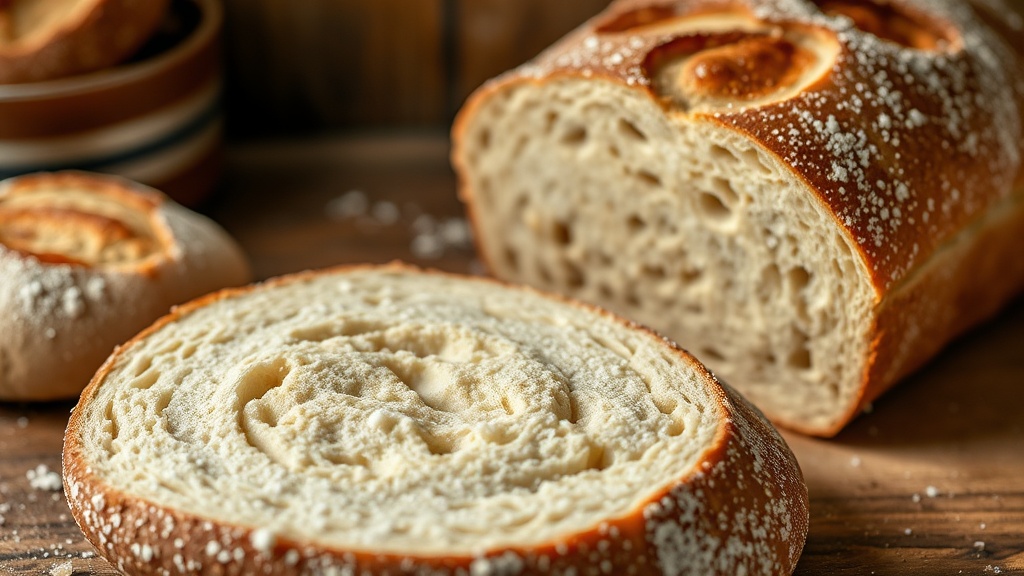
- A banneton or proofing basket — the Breadtopia 9-inch Round Banneton ($18) gives loaves their characteristic spiral pattern
- A lame (scoring tool) — or a sharp razor blade taped to a coffee stirrer in a pinch
Worth noting: many home bakers produce stunning loaves using nothing more than a mixing bowl, their hands, and a cheap cast-iron pot. The equipment helps, but technique matters far more.
How Do You Create and Maintain a Sourdough Starter?
A sourdough starter is simply flour and water mixed together and left to ferment, capturing wild yeast and bacteria from the environment. Building one from scratch takes about 7-10 days, though some eager bakers see activity sooner.
Here's the thing: the internet overflows with complicated feeding schedules. Don't overthink it. The simplest method works beautifully:
- Day 1: Mix 50g whole wheat flour + 50g water in a jar. Cover loosely.
- Day 2: Discard half (compost or use in crackers), add 50g flour + 50g water.
- Days 3-7: Repeat daily. Look for bubbles, doubling in size, and a pleasant tangy smell.
- Day 7+: Once the starter doubles within 4-6 hours of feeding, it's ready to bake with.
The catch? Temperature matters. Starters love warmth (75-80°F). A cold kitchen slows fermentation to a crawl. Many bakers keep starters near the oven light or on top of the refrigerator.
Once established, maintenance becomes flexible. Keep the starter in the refrigerator and feed it weekly if baking occasionally. For weekly bread, feed it the night before baking—roughly 1:2:2 ratio (starter:flour:water) works well. The King Arthur Baking sourdough guide offers excellent troubleshooting for sluggish starters.
Starter Troubleshooting Quick Reference
| Symptom | Cause | Fix |
|---|---|---|
| No activity after 3 days | Cold temperature, chlorinated water | Move to warmer spot, use filtered water |
| Hooch (dark liquid) on top | Hungry starter | Pour off liquid, feed immediately |
| Too sour/vinegary smell | Over-fermentation | Feed more frequently, use cooler water |
| Pink or orange streaks | Contamination | Toss it, start fresh (sorry) |
What's the Simplest Sourdough Recipe for Beginners?
The classic no-knead method removes complexity while delivering professional results. This formula—adapted from methods popularized by The Perfect Loaf—works every time.
Ingredients:
- 400g bread flour (King Arthur Bread Flour)
- 100g whole wheat flour (Bob's Red Mill)
- 350g water (room temperature)
- 100g active sourdough starter
- 10g salt
The Process:
Mix (Day 1, evening): Combine flours and water until just mixed. Let rest 30 minutes (autolyse). Add starter and salt, squeeze through fingers until incorporated. The dough feels shaggy—that's normal.
Bulk Fermentation (4-12 hours): Cover and let rise at room temperature. Every 30 minutes for the first 2 hours, perform stretch-and-folds: wet hands, grab one side of dough, stretch up, fold over. Rotate bowl, repeat 3 more times. The dough transforms from shaggy to smooth and elastic.
Pre-shape: When dough has risen 50-75% (not doubled—overproofing causes flat bread), gently scrape onto a lightly floured counter. Fold into a rough round, let rest 20 minutes.
Final Shape: Flip dough seam-side up. Fold bottom third up, left side in, right side in, roll toward you to create tension. Place seam-side up in a floured banneton or bowl lined with a floured tea towel.
Cold Proof: Refrigerate 8-24 hours. The cold slows fermentation and develops flavor.
Bake (Day 2): Preheat Dutch oven to 500°F for 45 minutes. Flip cold dough onto parchment, score with lame, lower into hot pot. Cover, bake 20 minutes. Remove lid, reduce to 450°F, bake 20-25 minutes more until deep chestnut brown.
Let cool completely—at least 2 hours—before slicing. Cutting warm bread ruins the texture (and nobody wants gummy crumb).
Why Does My Sourdough Keep Failing?
Most beginner failures stem from three culprits: weak starter, poor timing, or insufficient dough strength.
The Starter Problem: If bread consistently falls flat or lacks oven spring, the starter likely isn't active enough. A starter should double reliably within 4-6 hours of feeding at peak activity. Test it: drop a spoonful in water—it should float.
The Timing Problem: Overproofing (letting dough rise too long) causes flat, dense loaves with gummy crumb. Underproofing creates tight crumb and poor flavor. The poke test helps: flour a finger, press dough half an inch. It should spring back slowly, leaving a small indent. Springs back immediately? Needs more time. Stays indented? Overproofed.
The Structure Problem: Sourdough needs gluten development for height. Stretch-and-folds build this structure without kneading. Skip them, and the dough spreads like a pancake in the oven.
That said, even "failed" sourdough tastes better than store bread. Ugly loaves make excellent toast, croutons, or breadcrumbs. The learning curve is real—but the edible mistakes make it painless.
How Do You Store and Use Sourdough Bread?
Fresh sourdough stays good at room temperature for 3-4 days—longer than commercial bread thanks to the acidic environment created during fermentation. Skip the refrigerator; it accelerates staling.
Storage Methods:
- Day 1-2: Cut side down on a cutting board, no bag needed (the crust protects the crumb)
- Day 3-4: Paper bag or bread box
- Longer storage: Slice and freeze in a freezer bag; toast straight from frozen
Don't discard stale ends. Sourdough's strong structure (see—there's that word, but it actually fits here) makes exceptional:
- French toast (the tangy flavor complements maple syrup)
- Panzanella salad
- Bread pudding
- Homemade croutons tossed with olive oil and herbs
Baking sourdough becomes a rhythm—Friday evening mix, Saturday morning bake, Sunday french toast from the leftover heel. The starter lives in the fridge between bakes, a bubbling pet that asks only for flour and water in exchange for the best bread imaginable.
Start today. Mix flour and water. In a week, you'll bake something extraordinary. In a month, you'll wonder why you ever bought bread wrapped in plastic.