
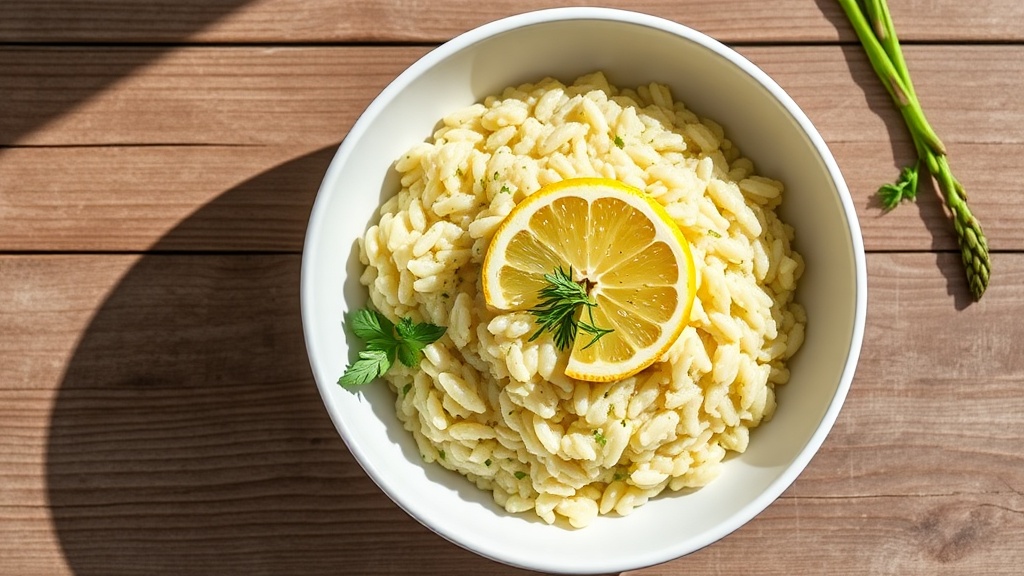
Spring Asparagus Risotto with Lemon Zest: Creamy Vegetarian Delight

What makes a spring asparagus risotto so irresistible?
Ever wonder how to turn fresh spring asparagus into a velvety, restaurant‑quality risotto without a splash of cream? Asparagus hits its peak in March‑April, offering a crisp‑tender bite and a subtle grassy sweetness that lifts the whole dish.
What ingredients do I need for a perfectly creamy risotto?
- 1½ cups Arborio rice
- 1 lb fresh asparagus, trimmed and cut into 1‑inch pieces
- 4 cups low‑sodium vegetable broth (kept warm)
- ½ cup dry white wine (optional, adds depth)
- 1 small onion, finely diced
- 2 cloves garlic, minced
- 2 Tbsp unsalted butter — room‑temperature butter melts smoothly
- ¼ cup freshly grated Parmesan cheese (or nutritional yeast for veg‑strict)
- 2 Tbsp olive oil
- Salt and freshly cracked black pepper to taste
- Fresh lemon zest and a squeeze of lemon juice (optional, for brightness)
Before you dive in, run a quick ingredient checkup so you’re not scrambling mid‑cook.
How should I prep the asparagus for maximum flavor?
- Blanch the asparagus pieces in boiling salted water for 2 minutes, then shock in ice water. This locks in color and snap.
- Pat dry and set aside. You can reuse the blanching water to keep your broth warm.
What’s the secret to a creamy risotto without adding cream?
The silkiness comes from the starch released by Arborio rice, not dairy. The key is gentle, patient stirring and adding broth a ladle at a time.
- Heat olive oil and 1 Tbsp butter in a heavy‑bottomed pot over medium heat.
- Sauté the onion until translucent, about 3 minutes. Add garlic and cook 30 seconds.
- Stir in the Arborio rice, toasting for 1‑2 minutes until the edges look translucent.
- Deglaze with white wine, stirring until the liquid is mostly absorbed.
- Begin adding the warm broth, one ladle at a time, stirring constantly. Wait until each addition is almost fully absorbed before adding the next. This usually takes 18‑20 minutes.
- When the rice is just al‑dente (a slight bite in the center), fold in the blanched asparagus.
- Finish with the remaining butter, Parmesan (or nutritional yeast), lemon zest, a squeeze of lemon juice, and a pinch of salt and pepper. Remove from heat and let sit for a minute; the residual heat finishes the creamy texture.
How do I plate and serve this dish for maximum wow factor?
- Scoop a generous portion of risotto into a shallow bowl.
- Drizzle a little extra‑virgin olive oil around the edge.
- Scatter a few extra Parmesan shavings and a pinch of fresh lemon zest.
- Garnish with a sprig of fresh herbs (like parsley or chives) and serve immediately while the rice is glossy and warm.
What pro tips can elevate this risotto from good to unforgettable?
- Use quality broth. Homemade vegetable stock or a low‑sodium store‑bought version adds depth.
- Don’t rush the stirring. Gentle, constant stirring releases starch and creates that silky mouthfeel.
- Finish off‑heat. Adding the final butter and cheese off the heat prevents the rice from becoming gummy.
- Season at the end. Taste and adjust salt, pepper, and lemon just before serving.
How does this recipe fit into a plant‑based spring menu?
With its bright asparagus, lemon, and optional nutritional yeast, this risotto pairs perfectly with other plant‑forward dishes—think a high‑fiber chickpea power bowl or a simple mixed greens salad. It’s a satisfying main that showcases seasonal produce without any animal‑derived meat.
What fresh spring asparagus ideas can I try next?
If you love this risotto, you’ll also enjoy roasting asparagus with a touch of miso, tossing it into a cold pasta salad, or grilling it for a smoky side. The possibilities are endless during peak season.
Takeaway
Fresh spring asparagus + Arborio rice = a creamy, comforting risotto that feels luxurious without any cream. Follow the steps, respect the patience the rice needs, and you’ll have a dish that sings of spring in every bite.
Related Reading
- 5 Fresh Ways to Celebrate Spring Asparagus — quick ideas to keep asparagus on your table all season.
- Ingredient Checkups Before Every Bake — the 3 pantry tests that save recipes.
- Mediterranean Chickpea Power Bowl — a high‑fiber spring lunch you can pair with the risotto.