
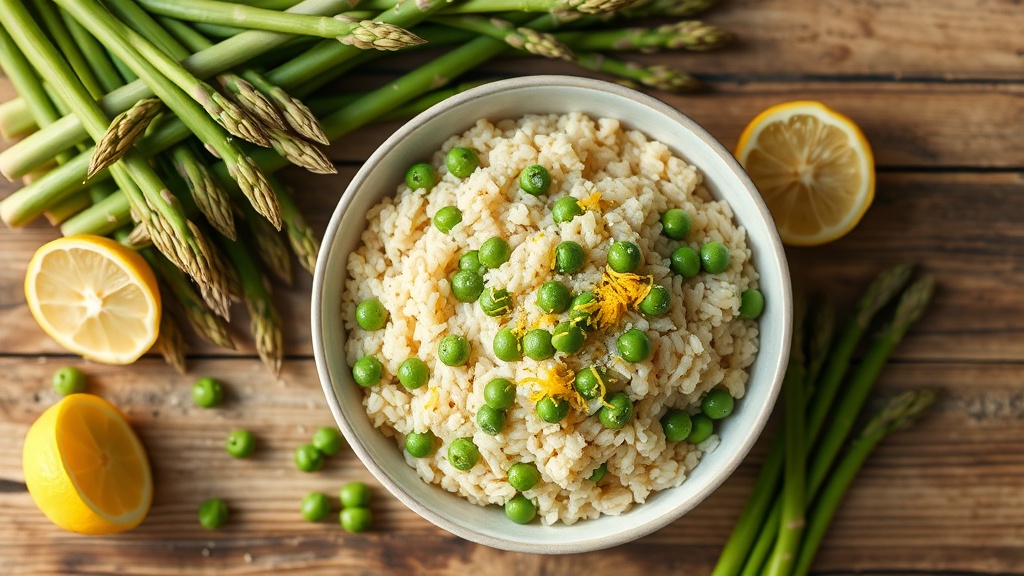
Spring Asparagus Risotto: Fiber‑Rich, Gut‑Healthy Vegetarian Delight

What makes this spring asparagus risotto a gut‑healthy star?
Asparagus is packed with prebiotic fiber that feeds the good bacteria in your gut. Pair it with whole‑grain arborio rice and a splash of lemon, and you get a comforting, creamy dish that’s also a fiber powerhouse.
What ingredients do you need?
- 1 cup whole‑grain arborio rice (or brown rice for extra fiber)
- 1 lb fresh asparagus, trimmed and cut into 1‑inch pieces
- ½ cup frozen peas (optional for extra sweetness)
- 1 small onion, finely diced
- 2 cloves garlic, minced
- 4 cups low‑sodium vegetable broth, kept warm
- ¼ cup grated Parmesan or nutritional yeast (for vegan option)
- 2 tbsp olive oil
- 1 tbsp butter (or extra olive oil for dairy‑free)
- Zest of 1 lemon
- Freshly ground black pepper and sea salt to taste
- Optional: a handful of fresh mint or basil for garnish
What equipment will make the process smooth?
A sturdy large skillet or wide‑bottomed saucepan, a wooden spoon, and a ladle for adding broth. A micro‑plane works great for lemon zest.
How do you make the risotto step‑by‑step?
- Sauté the aromatics. Heat olive oil and butter over medium heat. Add onion and cook 3‑4 minutes until translucent. Stir in garlic and cook another 30 seconds.
- Toast the rice. Add the arborio rice, stirring to coat each grain. Cook 2‑3 minutes until the edges look translucent.
- Deglaze with lemon zest. Sprinkle the lemon zest over the rice, stirring quickly to release the bright aroma.
- Gradually add broth. Add a ladleful of warm broth, stirring constantly until the liquid is mostly absorbed. Continue adding broth, one ladle at a time, stirring frequently. This process takes 18‑22 minutes.
- Introduce the asparagus. When the rice is about halfway cooked (around 10 minutes in), add the asparagus pieces. They’ll finish cooking as the risotto finishes.
- Finish with peas and cheese. Stir in peas, Parmesan (or nutritional yeast), and a splash of extra‑virgin olive oil. Season with salt and pepper.
- Rest and serve. Remove from heat, let sit for 2 minutes. Garnish with fresh mint or basil and an extra pinch of lemon zest.
What are some pro tips for the best texture?
- Keep the broth warm. Cold broth will halt the cooking process and make the risotto grainy.
- Stir constantly but not obsessively. Gentle stirring releases the starch for creaminess without over‑working the rice.
- Don’t over‑cook the asparagus. Add it midway so it stays bright‑green and retains that satisfying bite.
- Finish with a drizzle of olive oil. It adds silkiness and a subtle fruitiness.
What variations can you try?
If you love extra protein, stir in a handful of cooked chickpeas or top with a poached egg. For a richer flavor, replace half the broth with white wine (add it after toasting the rice). Vegan? Skip the butter and Parmesan, using extra olive oil and nutritional yeast.
What’s the nutrition breakdown?
One serving (≈1 cup) provides roughly:
- Calories: 320
- Protein: 9 g
- Fiber: 6 g (thanks to whole‑grain rice and asparagus)
- Healthy fats: 12 g from olive oil
- Key micronutrients: Vitamin K, folate, and potassium from asparagus
Where can you learn more about gut‑friendly spring meals?
Check out my Spring Fiber‑Packed Quinoa & Roasted Veggie Bowl for another high‑fiber, gut‑healthy recipe, and the Quick Fermentation for Spring Veggies guide to boost prebiotic content even further. For a broader spring cooking perspective, see the 5 Spring Baking Trends post.
What’s the final takeaway?
This spring asparagus risotto proves that comfort food can be both creamy and fiber‑rich. By using whole‑grain rice and fresh asparagus, you get a gut‑healthy dish that celebrates the season’s bounty—perfect for a cozy dinner or a weekend brunch.