
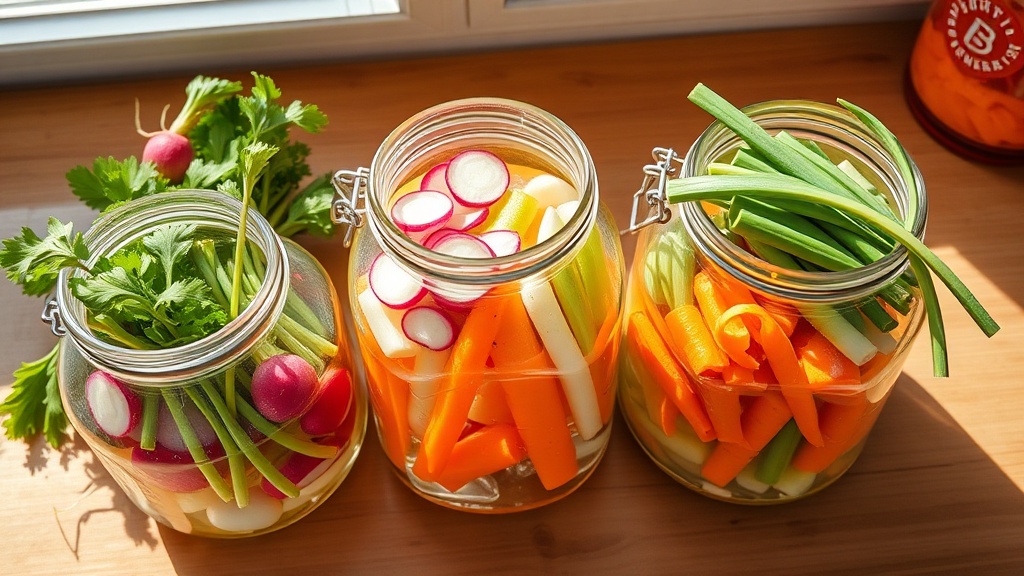
Quick Fermentation for Spring Veggies: Boost Gut Health

What is quick fermentation and why try it?
Quick fermentation is a low‑effort method that creates a lightly sour, probiotic‑rich brine in as little as 24‑48 hours. It’s ideal for busy home bakers who want the health benefits of traditional sauerkraut or kimchi without a mountain of equipment.
Which spring vegetables work best?
- Radishes – Their peppery bite mellows nicely.
- Carrots – Sweet crunch stays firm.
- Spring onions – Add a fresh, mild onion flavor.
How do I ferment radishes in just 2 days?
- Slice radishes thin (¼‑inch rounds).
- Salt them lightly (½ tsp per cup) and massage for 5 minutes to draw out moisture.
- Pack into a clean mason jar, pressing down until liquid covers the slices.
- Add brine (1 cup water + ½ tsp salt) if needed.
- Seal loosely with a lid or cloth.
- Store at room temperature, out of direct sun.
- Taste after 24 hours; let sit up to 48 hours for more tang.
Pro tip: Add a sliced garlic clove or a pinch of dill for extra flavor.
How do I ferment carrots with minimal equipment?
- Peel & shred carrots into match‑stick strips.
- Salt (1 tsp per cup) and let sit 10 minutes.
- Rinse briefly, then place in a jar.
- Cover with a 1:1 water‑to‑salt brine (1 tbsp salt per cup water).
- Press down with a clean weight so carrots stay submerged.
- Seal and leave at room temperature for 24‑36 hours.
Pro tip: A splash of apple cider vinegar at the start speeds up the tangy development.
How do I quickly ferment spring onions for salads?
- Thinly slice the green tops (white part can be used too).
- Salt lightly (¼ tsp per cup) and toss for 5 minutes.
- Pack into a jar, add enough brine to cover (water + ½ tsp salt).
- Seal and let sit for 12‑24 hours.
Pro tip: Mix the fermented onions into a quick vinaigrette for a gut‑friendly salad dressing.
Why do these techniques fit the spring season?
Spring’s warm days accelerate bacterial activity, meaning you get a tasty probiotic boost faster than in colder months. Plus, the crisp texture of fresh veg stays delightful when lightly fermented.
Related reading
- Spring Pea & Mint Quinoa Salad – 10‑Minute No‑Cook Brunch Boost – a fresh spring salad that pairs perfectly with fermented veggies.
- High‑Fiber Spring Pea & Mint Soup – another gut‑friendly recipe using spring produce.
- Mediterranean Chickpea Power Bowl – a great bowl to top with your quick‑fermented veggies.
Takeaway
You don’t need fancy gear to reap the gut‑boosting benefits of fermentation. With just a jar, salt, and a handful of spring vegetables, you can create tangy, probiotic‑rich toppings in under two days—perfect for brightening salads, bowls, and sandwiches all season long.