Perfecting the Lamination: A Beginner's Guide to Flaky Homemade Puff Pastry

A single sheet of high-quality puff pastry can contain over 729 layers of dough and butter, a structural feat that relies entirely on the physics of steam. While many home bakers view this as a daunting culinary mountain, the reality is that successful lamination is less about artistic flair and more about strict temperature control and repetitive, disciplined movement. Understanding the science behind these layers is the first step toward achieving that coveted shatteringly crisp texture in your mille-feuille or savory turnovers.
The Science of the Layer: What is Lamination?
Lamination is the process of folding a solid fat—traditionally unsalted high-fat butter—into a piece of dough to create alternating layers. When the pastry enters a high-heat environment, such as a preheated oven at 400°F (200°C), the water content within the butter layers turns into steam. This steam expands, pushing the layers of dough upward before the proteins in the flour set. If the butter melts into the dough before it hits the oven, you lose the lift and end up with a heavy, greasy sheet rather than a flaky masterpiece.
To achieve this, you must master the détrempe (the base dough) and the beurrage (the butter block). The goal is to keep the fat in a plastic, pliable state. If the butter is too hard, it will break into chunks and pierce the dough; if it is too soft, it will absorb into the flour, resulting in a bread-like consistency rather than a laminated one.
Essential Equipment for Success
Before you begin, ensure your workspace is prepared. You are not just fighting the dough; you are fighting the ambient temperature of your kitchen. A marble pastry board or a large granite countertop is ideal because it retains a cold temperature, helping to keep your butter stable. If you do not have a stone surface, a large stainless steel baking sheet can serve as a temporary cold base.
- A Heavy Rolling Pin: A French rolling pin is excellent for precision, but a heavy marble or tapered wooden pin provides the weight necessary to flatten the butter evenly.
- A Bench Scraper: This is vital for lifting the dough without tearing it and for cleaning up stray bits of dough from your work surface.
- A Digital Kitchen Scale: Volume measurements (cups) are too inconsistent for pastry. You must weigh your flour and water in grams to ensure the hydration of your détrempe is exact.
- A Ruler: Measuring the thickness of your dough (aiming for 1/4 inch or 6mm) ensures even baking and consistent layer development.
The Ingredient Profile: Quality Matters
The success of your puff pastry is heavily dependent on the fat you choose. For the best results, use a high-fat European-style butter, such as Kerrygold or Plugra. These butters typically have a much higher butterfat content (at least 82%) and a lower water content than standard American supermarket brands. This higher fat content ensures the layers remain distinct and provides a much richer flavor profile.
For the flour, a high-protein bread flour is often preferred over all-purpose flour for the détrempe. The stronger gluten network provides the structural integrity needed to hold the expanding steam. If you find your dough is too elastic or "snaps back" during rolling, you may need to incorporate a small amount of pastry flour to soften the gluten, but start with a standard bread flour for the best lift.
The Formula for the Perfect Détrempe
The dough base must be sturdy enough to hold the weight of the butter. A standard ratio involves a precise balance of flour, water, a small amount of salt, and a touch of lemon juice or vinegar. The acid in the lemon juice serves two purposes: it helps relax the gluten slightly and acts as a mild preservative for the dough during the resting stages.
- Mixing: Combine 250g of bread flour with 125g of ice-cold water and 5g of fine sea salt. Mix until a shaggy dough forms, then knead briefly until smooth.
- The Chill: Wrap the dough tightly in plastic wrap and refrigerate for at least one hour. This is non-negotiable; the dough must be completely chilled before the butter is introduced.
Step-by-Step Lamination Process
Once your dough and your butter block are both cold, you are ready to begin the lamination. This is where the "turns" happen. A "turn" is a specific way of folding the dough to create layers. We will focus on the Single Turn and the Double Turn (Book Fold).
Step 1: Preparing the Beurrage (The Butter Block)
Place 250g of cold, high-fat butter between two sheets of parchment paper. Using a rolling pin, pound the butter to soften it, then roll it into a perfect square, approximately 6 inches by 6 inches. The butter should be the same consistency as your dough—pliable but not melting. If you can press your finger into the butter and it leaves a clear indentation without sticking to your skin, it is ready.
Step 2: Enclosing the Butter
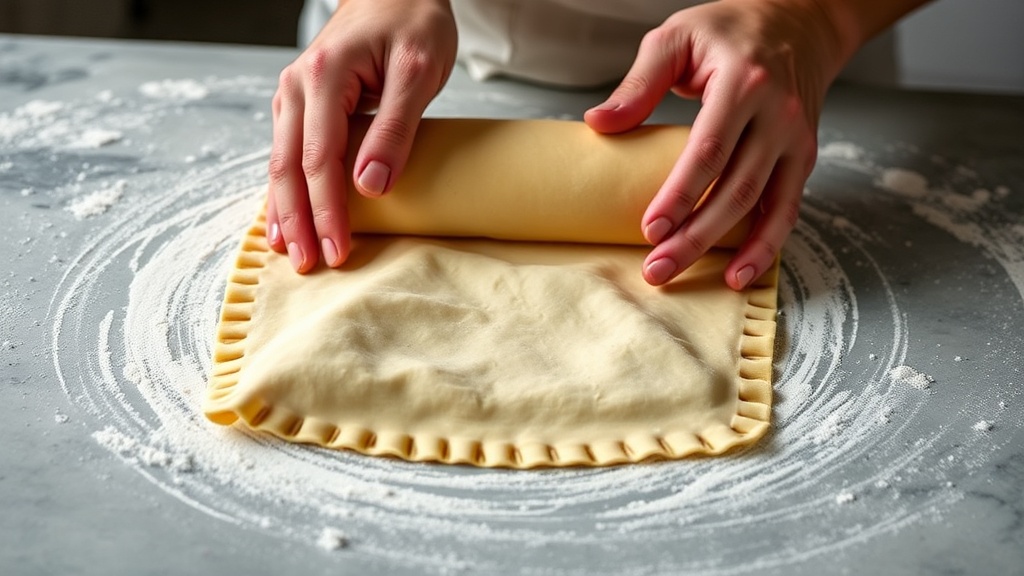
Roll your chilled détrempe into a square that is roughly twice the size of your butter block. Place the butter block in the center of the dough. Fold the corners of the dough over the butter, sealing the edges completely. You are essentially creating a "butter envelope." Ensure there are no air pockets, as air can cause the dough to tear during the rolling process.
Step 3: The First Turn (The Single Turn)
Dust your work surface lightly with flour. Roll the dough into a long rectangle, moving the rolling pin from the center outward. When you reach the end, do not force the pin; let the weight do the work. Once you have a long rectangle, fold one-third of the dough over the center, and then fold the other third over that (like a letter). This is one single turn. Rotate the dough 90 degrees.
Step 4: Resting and Repeating
This is the part where most beginners fail by rushing. After every two turns, you must refrigerate the dough for at least 30 minutes. This allows the gluten to relax and the butter to firm up. If you skip this, the dough will become difficult to roll and the layers will be uneven. Repeat the process of rolling and folding until you have completed a total of six turns (three single turns and three double turns is a standard professional method).
"The secret to professional pastry isn't a fancy machine; it's the patience to let the dough rest. If the dough fights you, it's telling you it's too warm or too stressed. Listen to it."
Troubleshooting Common Lamination Failures
Even with the best intentions, things can go wrong. Recognizing the symptoms of a failed bake can help you adjust your technique for the next attempt.
Problem: The Butter is Leaking Out
If you see streaks of yellow butter on your work surface or inside your dough, your butter was too warm. This is called "melting into the dough." When this happens, you are no longer making puff pastry; you are making a shortcrust or a flaky pie dough. To prevent this, work in a cool room and ensure your dough and butter are at the same temperature and consistency before you begin.
Problem: The Pastry is Not Rising (No Lift)
A lack of lift is usually caused by one of three things: insufficient steam, a weak dough structure, or an underheated oven. If your oven temperature is too low (below 400°F), the butter will melt and soak into the dough before the steam can push the layers up. Ensure your oven is fully preheated using an oven thermometer to verify the actual temperature, rather than relying solely on the dial.
Problem: The Layers are Uneven or "Shaggy"
This happens if you roll the dough too aggressively or if the dough is not rested enough. If the gluten is too tight, it will resist the rolling pin, causing the dough to bunch up and create uneven thicknesses. Always use a light touch and a ruler to check your thickness as you go.
Final Baking Instructions
When you are ready to bake your finished pastry—whether it is for a savory tart or a sweet Napoleon—ensure your oven is at a high, consistent heat. For most puff pastry applications, 400°F (200°C) is the sweet spot. If you are making a large batch, avoid overcrowding the baking sheets, as this can drop the oven temperature and prevent the steam from doing its job.
For a beautiful, golden finish, you might consider an egg wash. A simple mixture of one egg and a tablespoon of heavy cream, whisked until smooth, will provide a professional, high-gloss sheen. However, do not over-apply the wash, as excess liquid can weigh down the delicate top layers of the pastry.
As you refine your technique, remember that baking is a practice of observation. Watch how the dough reacts to the rolling pin, feel the temperature of the butter, and listen to the sound of the crust as it cools. Once you master the lamination, the possibilities for your baking are truly endless.
Steps
- 1
Prepare the Dough and Butter Block
- 2
The First Fold (Single Turn)
- 3
The Second Fold (Double Turn)
- 4
Chilling and Resting the Dough
- 5
Final Roll and Baking