
Lemon Blueberry Scones: The Recipe That Finally Works (Tested 5 Times)

Lemon Blueberry Scones: The Recipe That Finally Works (Tested 5 Times)
Okay, I need to tell you about scones. Because every scone recipe I've ever tried came out either dry as a hockey puck or dense as a brick. But THIS version? Five tests to get it right, and now I'm obsessed.
The secret is three things: cold butter (I mean COLD), the right liquid ratio (cream makes a difference), and knowing exactly when to stop mixing. Plus, we're folding in lemon zest and fresh blueberries at the end so they don't get bruised or bleed into the dough.
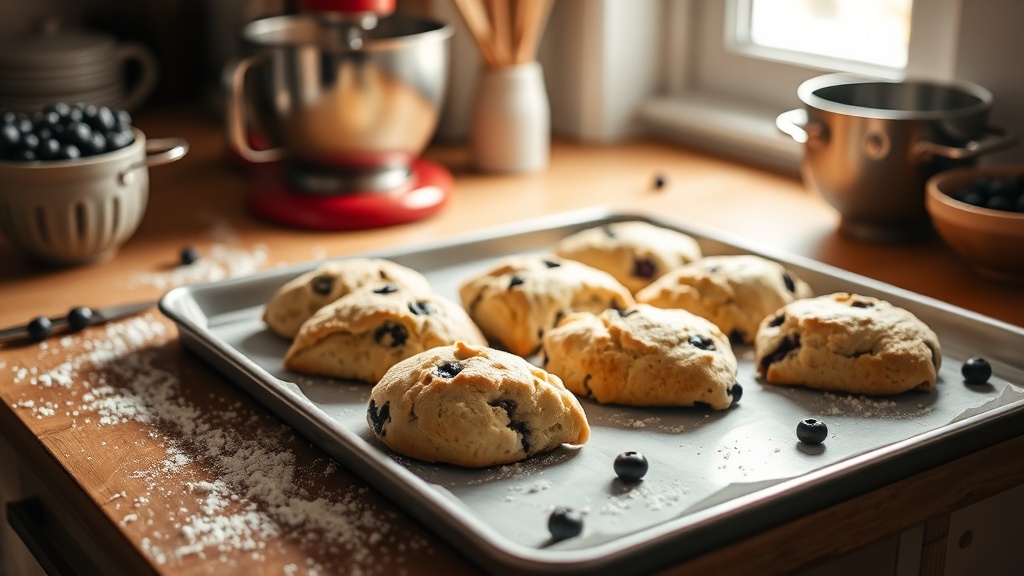
These are tender, slightly crumbly (in the best way), and have this bright citrus note that makes them feel fancy but taste like home baking. Fifteen minutes to mix, twenty minutes to bake. Your kitchen will smell incredible.
Equipment You'll Need
- Digital kitchen scale (seriously, this matters for scones)
- Large mixing bowl
- Pastry cutter OR two knives OR your fingertips (all work)
- Measuring spoons
- Baking sheet
- Parchment paper
- Microplane zester (or box grater for lemon zest)
- Hand mixer (optional — you can mix by hand)
Ingredients
For the scones:
- 250g (2 cups) all-purpose flour
- 50g (¼ cup) granulated sugar
- 7.5ml (1.5 teaspoons) baking powder
- 2.5ml (½ teaspoon) fine sea salt
- 115g (8 tablespoons / 1 stick) cold unsalted butter, cubed
- 240ml (1 cup) cold heavy cream
- 1 large egg (for egg wash)
- 15ml (1 tablespoon) whole milk (for egg wash)
- Zest of 2 large lemons (about 15ml / 1 tablespoon)
- 150g (1 cup) fresh blueberries (or frozen, thawed and patted dry)
For serving (optional):
- Lemon glaze: 100g (¾ cup) powdered sugar + 15-30ml (1-2 tablespoons) fresh lemon juice
- Whipped cream
- Jam (strawberry or raspberry work beautifully)
Instructions
Step 1: Prepare your mise en place (5 minutes)
Cut your cold butter into small cubes and put it back in the fridge. Pour your heavy cream into a measuring cup and refrigerate it too. The colder everything is, the more tender your scones will be — this is non-negotiable. Trust me on this.
Step 2: Mix the dry ingredients (2 minutes)
In a large bowl, whisk together the flour, sugar, baking powder, and salt. You want these evenly distributed so the baking powder is throughout the dough (otherwise you'll get dense spots).
Step 3: Cut in the butter (5 minutes)
Add the cold butter cubes to the dry ingredients. Using a pastry cutter, two knives, or your fingertips, work the butter into the flour until it looks like coarse breadcrumbs. You want pea-sized pieces of butter visible — these create the flaky layers. If you overmix and the butter gets completely incorporated, your scones will be dense.
What to look for: The mixture should look sandy with some larger butter pieces still visible. If it's getting warm or the butter is disappearing, stick the bowl in the fridge for 2 minutes.
Step 4: Add the cream (2 minutes)
Pour the cold heavy cream into the flour mixture and fold it in gently with a spatula or wooden spoon. Don't stir — fold. The dough will come together into a shaggy mass. Stop as soon as everything is moistened. Overmixing develops gluten, which makes scones tough.
What to look for: The dough should come together but still look a bit rough. There might be a few dry flour streaks — that's fine. You're going to fold in the blueberries and lemon next, which will help bring everything together.
Step 5: Add lemon zest and blueberries (2 minutes)
Gently fold in the lemon zest and blueberries. Be gentle with the blueberries — you don't want them to burst and turn the dough purple. If you're using frozen blueberries, make sure they're thawed and patted completely dry first (wet berries will make your scones soggy).
Step 6: Shape and chill (5 minutes active + 15 minutes chill)
Turn the dough out onto a lightly floured surface. Gently pat it into a circle about 1 inch (2.5 cm) thick. Using a sharp knife (or a 2-inch / 5 cm biscuit cutter), cut the dough into 8 wedges (like cutting a pizza) or 8 rounds.
Place the scones on a parchment-lined baking sheet and refrigerate for at least 15 minutes. This helps them hold their shape in the oven and keeps them tender.
Step 7: Egg wash (2 minutes)
Preheat your oven to 400°F (200°C). Whisk together the egg and milk. Brush the top of each scone lightly with the egg wash — this gives them a beautiful golden top. Don't soak them, just a light brush.
Step 8: Bake (18-22 minutes)
Bake at 400°F (200°C) for 18-22 minutes, until the tops are golden brown and a toothpick inserted into the center comes out with just a few moist crumbs (not wet batter, but not completely dry either).
What to look for: The scones should be light golden on top and spring back slightly when you touch them. If they're pale, they need another 2-3 minutes. If the tops are darkening too quickly, tent with foil.
Step 9: Cool (10 minutes minimum)
Let the scones cool on the baking sheet for 5 minutes, then transfer to a wire rack. They'll continue cooking slightly as they cool. Eat them warm with jam and whipped cream, or cool completely and store.
Troubleshooting
If your scones came out dense and heavy:
- You overmixed the dough. Scones need a light hand — fold, don't stir. Try again and stop as soon as everything is moistened.
- Your butter wasn't cold enough. Keep everything refrigerated until the last minute.
- You used milk instead of cream. Cream has more fat, which creates tenderness. Don't substitute.
If your scones came out dry:
- You baked them too long. Check at 18 minutes, not 22. They should have a few moist crumbs inside, not be completely cooked through.
- You measured flour by scooping the cup into the flour (which compacts it). Use a scale, or spoon flour into the cup and level it off.
- Your blueberries were wet. Frozen blueberries especially — thaw them and pat them completely dry first.
If your scones spread flat instead of rising:
- You didn't chill the dough before baking. Those 15 minutes matter — they let the butter stay cold so it creates steam pockets in the oven.
- Your baking powder might be old. Baking powder loses potency after about 6 months. Check the date.
If your blueberries sank to the bottom:
- They were too wet. Thaw frozen berries and pat them dry. Fresh berries should be dry too.
- You folded them in too gently and they settled. This is minor — the flavor is still there, just at the bottom.
Make-Ahead & Storage
Dough: You can make the dough up to the egg wash step, cover it with plastic wrap, and refrigerate for up to 24 hours. Bake as directed (you might need an extra 1-2 minutes if baking from cold).
Baked scones: Store in an airtight container at room temperature for up to 2 days. They're best eaten the day they're baked, but they'll keep.
Freezing: Unbaked scones freeze beautifully. Shape them, place on a baking sheet, freeze until solid (about 2 hours), then transfer to a freezer bag. Bake from frozen, adding 2-3 minutes to the bake time.
Reheating: Wrap a cooled scone in foil and warm in a 300°F (150°C) oven for 10 minutes. They'll taste almost fresh-baked.
Substitution Notes (Tested)
No fresh blueberries? Frozen blueberries work great — thaw them and pat them completely dry first. Don't use canned (too wet).
No heavy cream? You can use a combination of whole milk + melted butter (115ml milk + 30g melted butter), but the scones will be slightly less tender. Buttermilk doesn't work as well here — it changes the texture.
Different citrus: Orange zest works beautifully in place of lemon. Lime is too assertive. Stick with lemon or orange.
No lemon zest? You can skip it and just use vanilla (5ml / 1 teaspoon) for a plain blueberry scone. But the lemon really makes these special.
Almond extract: I tested adding 2.5ml (½ teaspoon) almond extract along with the lemon zest. It's lovely and subtle — not overpowering. Optional, but worth trying.
The Bottom Line
Scones are one of those bakes that seem intimidating until you understand what's happening: you're creating pockets of cold butter in the dough so that when it hits the hot oven, the butter melts and creates steam, which puffs up the scone and creates those tender, flaky layers.
Cold ingredients, minimal mixing, proper chilling, and don't overbake. That's it. That's the whole secret.
Make these this weekend. Serve them warm with jam and whipped cream. Tell me how they turned out.