How to Make Perfectly Flaky Croissants at Home

The Science Behind Flaky Layers
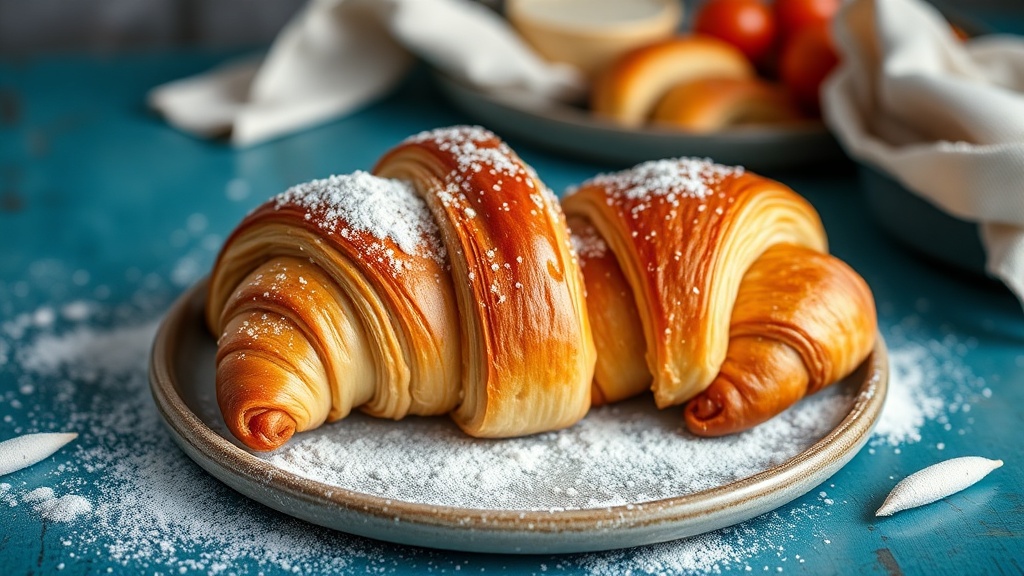
This guide covers the complete process for making authentic French croissants at home, from mixing the dough to achieving the golden, shattering exterior that defines proper viennoiserie. Understanding the technique matters because store-bought croissants—often priced at $3.50 to $5.00 each at bakeries like Tartine or Balthazar—can be replicated at home for roughly $0.80 per piece with superior flavor and freshness. The method requires patience and precision, but the results reward the effort with pastries that rival professional bakery output.
Understanding the Ingredients
Croissants depend on five core ingredients, and the quality of each directly impacts the final product. King Arthur Bread Flour, with its 12.7% protein content, provides the gluten structure necessary to support butter layers during lamination. All-purpose flour, typically containing 10-12% protein, produces a softer crumb that some home bakers prefer for a more delicate bite.
European-style butter—specifically Plugrá, Kerrygold, or President brands containing 82-84% butterfat—proves essential. Standard American butter at 80% butterfat contains more water, which creates steam during baking and can cause layers to merge rather than separate. For a standard batch yielding 12 croissants, 500 grams of high-fat butter forms the lamination block.
Fresh yeast provides the most reliable rise, though active dry yeast works when properly activated in 105°F milk. Sugar content should stay between 10-12% of total flour weight—roughly 50-60 grams per 500 grams flour—to feed yeast without making the pastry cloying. Salt, at 2% of flour weight (10 grams), balances the richness and strengthens gluten development.
The Détrempe: Building the Foundation
The initial dough, called détrempe in French pastry terminology, must be soft and slightly tacky but not sticky. Combine 500 grams bread flour, 50 grams granulated sugar, 10 grams fine sea salt, 10 grams fresh yeast (or 4 grams active dry), 250 milliliters whole milk at room temperature, and 50 grams softened unsalted butter in a stand mixer fitted with a dough hook.
Mix on low speed for 3 minutes until ingredients combine, then increase to medium for 6-8 minutes. The dough should pass the windowpane test: stretch a small piece until it becomes thin enough to see light through without tearing. This indicates adequate gluten development for the lamination process ahead.
Shape the détrempe into a 1-inch thick rectangle, wrap tightly in plastic, and refrigerate for minimum 6 hours or overnight. This cold rest firms the butter within the dough and relaxes gluten strands, making the rolling process manageable.
Temperature Control Throughout
Maintain dough temperature between 60-65°F during all stages. A digital instant-read thermometer, such as the Thermapen ONE, provides accuracy within 0.5 seconds. If dough warms above 70°F, butter begins melting into the surrounding dough, destroying the distinct layers essential to flakiness. Work quickly during rolling phases, and return dough to refrigeration for 20-minute rests if it becomes too soft to handle.
The Beurrage: Preparing the Butter Block
While the détrempe rests, prepare the butter block, or beurrage. Pound 250 grams of cold European butter between two sheets of parchment paper into a 6-inch by 8-inch rectangle, approximately 1/2-inch thick. The butter should remain pliable but cold—think modeling clay consistency. If it becomes too soft, refrigerate for 10 minutes; if it cracks when bent, let it warm slightly at room temperature.
The beurrage dimensions matter precisely. When enclosed in the détrempe, the butter should cover exactly two-thirds of the dough surface, leaving a clean border on three sides for proper sealing. Uneven butter distribution creates weak points where steam escapes during baking, resulting in flat, dense pastries.
Lamination: Creating the Layers
Lamination folds butter into dough through a series of turns that multiply layers exponentially. For croissants, three single turns (also called letter folds) produce 27 distinct butter layers—sufficient for the honeycomb interior characteristic of quality croissants.
- First Turn: Roll the chilled détrempe to 10 inches by 16 inches on a lightly floured surface. Place the butter block on the bottom two-thirds, leaving the top third exposed. Fold the exposed third down over the butter, then fold the bottom third up, like folding a letter. This is a single turn. Rotate the dough 90 degrees so the folded edge faces left. Wrap and refrigerate for 30 minutes.
- Second Turn: Roll the dough to 10 inches by 24 inches, maintaining even thickness throughout. Perform another single turn, wrapping and chilling for 30 minutes minimum.
- Third Turn: Repeat the rolling and folding process once more. After this turn, the dough contains 27 layers of butter separated by thin sheets of dough. Wrap and refrigerate for minimum 2 hours before shaping.
Each rolling pass should happen in single, firm strokes rather than back-and-forth movements, which can destroy layers. If the dough resists or shrinks back, rest it refrigerated for 10 minutes to relax gluten before continuing.
Signs of Proper Lamination
Correctly laminated dough shows visible butter striations when cut with a bench scraper. The surface remains smooth without cracks or tears. If butter breaks through the dough surface during rolling, dust the spot heavily with flour and continue—this prevents the butter from sticking to the rolling pin and tearing away from the dough matrix.
Shaping Classic Croissants
Roll the laminated dough to 20 inches by 10 inches, approximately 1/4-inch thick. Use a sharp chef's knife or pizza cutter to trim edges straight, revealing the layered interior. This trim provides visual confirmation that lamination succeeded and ensures clean edges for uniform baking.
Cut the rectangle in half lengthwise to create two 20-inch by 5-inch strips. Mark each strip every 5 inches, then cut from mark to opposite corner, creating triangles with 5-inch bases and 10-inch heights. Each triangle yields one croissant.
To shape, position a triangle with the base facing you. Make a 1/2-inch notch in the center of the base, then roll from base to tip, applying gentle pressure to maintain tension without stretching the dough. Curve the ends inward to form the classic crescent shape. Place on parchment-lined baking sheets, spacing 3 inches apart to allow expansion.
Proofing for Volume and Flavor
Croissants require final proofing at 75-78°F for 2.5 to 3 hours—significantly longer than standard bread. During this time, yeast produces carbon dioxide that separates the laminated layers, and enzymes develop complex flavors through slow fermentation.
The visual cue for proper proofing matters more than time: fully proofed croissants appear visibly puffy with separated, wobbly layers when the baking sheet is gently shaken. The dough should feel light and airy, with visible air pockets if viewed from the side. Underproofed croissants bake into dense, heavy pastries; overproofed ones collapse in the oven.
Preheating the oven to 400°F during the final 30 minutes of proofing ensures immediate heat exposure when croissants enter. Steam injection—achieved by tossing 6-8 ice cubes onto a preheated baking steel on the oven floor—creates the initial moisture necessary for optimal oven spring.
Baking and Finishing
Brush proofed croissants gently with an egg wash made from one whole egg beaten with 15 milliliters water. This creates the signature sheen without weighing down the delicate layers. Bake at 400°F for 10 minutes, then reduce to 375°F for an additional 12-15 minutes until deeply golden brown.
Internal temperature provides the most reliable doneness indicator: properly baked croissants reach 190-200°F at their center. Cool on wire racks for 20 minutes before serving—this allows the interior structure to set and prevents the bottom from becoming soggy from trapped steam.
Troubleshooting Common Issues
- Butter leakage during baking: Indicates proofing temperature exceeded 80°F, melting butter before the dough structure set. Use a digital thermometer to verify proofing environment stays below 78°F.
- Dense, no visible layers: Results from insufficient gluten development in détrempe, too few lamination turns, or butter melting into dough during rolling. Verify windowpane test passes before beginning lamination.
- Uneven browning: Caused by hot spots in oven or uneven dough thickness. Rotate baking sheets 180 degrees at the 10-minute mark and use an oven thermometer to verify true temperature.
- Croissants unroll during baking: The tip wasn't tucked underneath during shaping, or insufficient tension was maintained while rolling triangles. Press the tip firmly against the underside before placing on the baking sheet.
Storage and Refreshing
Fresh croissants maintain optimal texture for 8 hours at room temperature. For longer storage, freeze unbaked, shaped croissants immediately after shaping on a baking sheet until solid, then transfer to freezer bags for up to 3 weeks. Proof frozen croissants for 4-5 hours before baking, or thaw overnight in the refrigerator and proof for 2.5 hours.
Refresh day-old baked croissants by heating in a 350°F oven for 5 minutes. Microwaving produces a rubbery texture and should be avoided. Alternatively, slice stale croissants horizontally, dip in an egg mixture of 2 eggs, 120 milliliters milk, and 10 grams sugar, then pan-fry in butter for almond croissant French toast.
Equipment Worth Investing In
While croissants can be made with basic kitchen tools, specific equipment improves consistency. A French rolling pin, tapering at the ends, provides better control for the directional pressure lamination requires compared to handled rolling pins. The Matfer Bourgeat 20-inch model, priced around $25, handles the job admirably.
A bench scraper serves multiple purposes: cutting dough, cleaning the work surface, and measuring rolled dimensions. The OXO Good Grips bench scraper includes etched measurements for precision. Heavy-duty half-sheet pans, such as those from Nordic Ware, conduct heat evenly without warping at high temperatures.
The ThermoWorks DOT probe thermometer, costing approximately $43, monitors proofing environment continuously, alerting when temperatures drift outside the optimal range. Given that temperature control determines success or failure more than any other variable, this investment prevents ruined batches.
"The difference between a good croissant and a great one is temperature discipline. Every stage—mixing, lamination, proofing, baking—has a specific temperature range where magic happens. Respect those numbers, and the pastry rewards the precision."
Scaling the Recipe
The standard recipe yields 12 standard-sized croissants. For mini croissants suitable for brunch spreads, cut triangles with 3-inch bases and 6-inch heights, reducing baking time to 12-14 minutes total. For larger bakery-style croissants weighing approximately 80 grams each, divide laminated dough into 8 portions rather than 12, extending baking time by 3-4 minutes.
Double batches require processing separately—attempting to laminate 1 kilogram of dough at once creates uneven pressure and inconsistent layer thickness. Prepare two separate détrempe and beurrage portions, laminating each individually for uniform results.