How to Decorate Cupcakes Like a Pro (Using Just 2 Piping Tips)
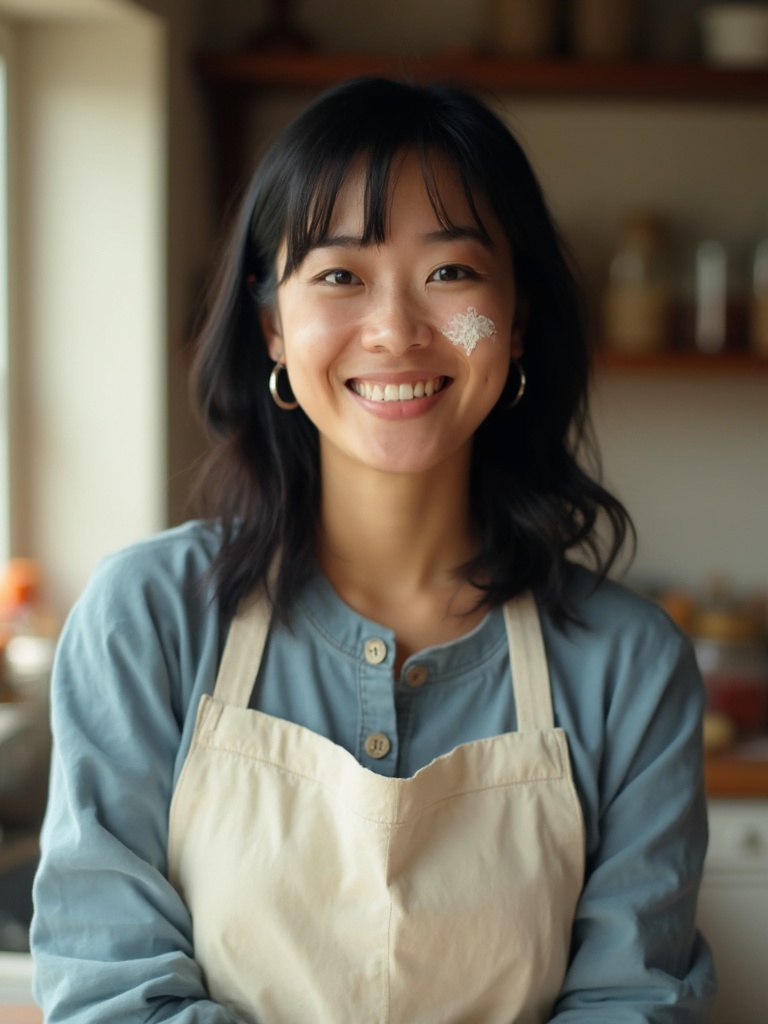
My first attempt at piped cupcakes was... not cute.
I'm talking a sad, lumpy blob of frosting that looked like something a toddler applied with a butter knife. I had watched approximately forty-seven YouTube videos. I had bought a kit with eighteen different piping tips. I was ready.
Reader, I was not ready.
The frosting was too warm, my bag was overfilled, and I had no idea I was supposed to hold the bag straight up like that. The result was a plate of cupcakes I absolutely did not photograph. I served them to my roommates with a very firm "don't look at them, just eat them."
That was four years ago. These days I can pipe a rosette in my sleep, and the biggest thing I've learned? You don't need fancy skills. You don't need eighteen tips. You need two tips, the right buttercream consistency, and five techniques you can learn in a single afternoon.
That's literally it. Let me walk you through everything.
What You Actually Need (It's Less Than You Think)
Here's the thing nobody tells you when you buy one of those massive tip sets: you'll use maybe three of them, ever. The rest live in a drawer until you move.
Start with just two:
Wilton 1M (Large Open Star) — This is the workhorse. The one. If I could only keep one piping tip for the rest of my life, it's the 1M. It creates classic swirls, rosettes, that gorgeous tall soft-serve look — basically every design you've ever seen on a bakery cupcake, the 1M can do it.
Wilton 6B (Large Open Star) — More defined edges than the 1M, creates beautifully textured puffs and swirls. Once you have these two, you're actually set.
Bonus, if you want to add a third: Wilton 2D (Closed Star) for ruffles and tighter rosettes. But honestly? Start with the 1M and 6B and see how far they take you before buying anything else.
Other things you'll need:
- Disposable piping bags (get the 12" or 14" ones — larger than you think)
- A coupler (so you can swap tips without changing bags)
- An offset spatula (optional but you'll reach for it constantly)
- A tall glass or cup (more on this in a second)
The bag-filling trick that changed my life: Put your piping bag in a tall glass, cuff the top edge of the bag over the rim of the glass, then spoon your frosting in. Your hands stay clean, the bag stays open, and you don't end up with frosting on your elbows. I don't know why this isn't in every basic baking guide. Do it every time.
The Buttercream Base: Getting It Right
Before we talk techniques, we need to talk about the frosting itself, because a gorgeous piping job is impossible if your buttercream is the wrong consistency.
My go-to vanilla buttercream:
- 1 cup (225g) unsalted butter, cold — and I mean actually cold, straight from the fridge
- 3–4 cups (360–480g) powdered sugar, sifted
- 2–3 tbsp heavy cream or milk
- 1 tsp vanilla extract
- Pinch of salt
Wait, cold butter? Yes. Cold. I know everything you've been told says to use room temperature butter for buttercream, and for cakes you absolutely should — but for piping, cold butter is your best friend. It holds its shape, it takes color better, and you get that light, fluffy texture without the frosting going droopy on you.
Beat the cold butter in a stand mixer for 3–4 minutes until it starts to look lighter. Add your powdered sugar one cup at a time. Add your vanilla and salt. Then add cream, one tablespoon at a time, until it's the right consistency.
What's the right consistency? It should hold a stiff peak when you pull your spatula out — think peanut butter, but slightly lighter. Not so stiff it hurts your hand to squeeze the bag, not so soft that it droops the second it hits the cupcake.
Troubleshooting:
- Too soft? Chill the bowl for 15–30 minutes, then re-whip. Or add powdered sugar a tablespoon at a time.
- Too stiff? Add cream or milk, one teaspoon at a time.
- Air bubbles forming? You're overmixing. Drop the speed to low for the last two minutes to smooth everything out.
One more thing: your cupcakes must be completely cool. I know you're excited. I know they smell amazing. Cool. Them. Completely. Frosting on a warm cupcake is frosting that will slide right off and ruin your day.
The 5 Techniques (Practice on Parchment First)
Okay, this is the fun part. Before you touch an actual cupcake, pipe a few swirls onto a sheet of parchment paper. No stakes, no stress. You can scrape it back into the bowl and try again. Professional decorators do this. It's not a beginner thing — it's a smart thing.
Ready? Let's go.
1. The Classic Swirl (1M Tip)
This is the one. The bakery standard. The design that says "yes, I know what I'm doing."
- Hold your bag straight up and down, perpendicular to the cupcake, tip about half an inch above the surface
- Start at the outer edge of the cupcake
- Apply steady pressure and move in a spiral toward the center
- As you reach the center, start moving upward — you're building height now
- When you hit the top, release pressure and pull up sharply to create a little peak
The number one mistake: rushing at the end and making a flat top. Don't rush at the end. The peak is the whole thing.
When to use it: Birthday cupcakes, any time you want something that looks polished without being fussy. Classic for a reason.
2. The Rosette (1M or 6B Tip)
This one looks fancy and takes about thirty seconds once you get it.
- Position your tip at the center of the cupcake
- Apply steady pressure and pipe in a tight spiral outward (or start at the outside and work in — either way works, try both and see what feels natural)
- Overlap each ring slightly as you go
- When you reach the edge, release pressure and tuck the tail under slightly
The key is keeping your pressure consistent the whole way through. If you squeeze harder at some points than others, the petals will be uneven. Steady hands, steady pressure.
When to use it: Elegant occasions, Mother's Day cupcakes, any time you want them to look like they came from that fancy bakery downtown.
3. The Tall Soft-Serve Swirl (1M Tip)
This is the Instagrammable one. The tall, dramatic, why-does-mine-look-like-that one. It's also surprisingly easy once you understand the physics.
- Start your tip at the center of the cupcake, close to the surface
- Apply pressure and spiral outward once around the base — just once, to create a foundation ring
- Then start spiraling inward and upward, building height with each pass
- Keep going until you've stacked enough height, then release and pull up for a peak
You're building a soft-serve ice cream cone shape. The key is starting with that foundation ring — it gives you a stable base to stack on. Without it, everything leans.
When to use it: When you want height and drama. Birthday photos. When someone's coming over and you need them to gasp a little.
4. The Two-Tone Rose (1M or 2D Tip)
This technique creates that gorgeous gradient effect — two colors swirled together so you get a different hue peeking out from between the petals. It looks like something you ordered from a specialty bakery. It is not hard.
- Spread one color of buttercream (your accent color) in a thick stripe along the inside edge of your piping bag
- Fill the center of the bag with your main color
- Pipe any technique you want — the two colors will naturally come together as you pipe
That's genuinely it. The bag does the work. The two-tone effect just... happens.
Tips: Use a spoon or small spatula to apply the accent color around the inside of the bag — if you use your finger it gets messy fast. Also, the more contrast between your colors, the more dramatic the effect. Try lavender bag with a white core, or pink with a coral accent.
When to use it: When you want people to ask how you did that. Every time.
5. The Ruffle (2D Tip)
This is the elegant one. The one that looks delicate and vintage and like you definitely went to pastry school. (You didn't. Neither did I. We're figuring it out together.)
- Press your tip lightly against the center of the cupcake
- Apply pressure and slowly pull the tip upward and outward while rotating the cupcake (or your wrist)
- The frosting fans out into soft, petal-like ruffles as you move
- Work from the center outward, overlapping each ruffle slightly
The texture comes from the movement — your speed and pressure control how loose or tight the ruffles look. If your arm tenses up, the ruffles get stiff and weird. Stay loose.
This one is genuinely the technique I practice most before doing a full batch, because the motion is different from everything else. Five minutes on parchment paper before you start and you'll feel the difference immediately.
When to use it: Bridal showers, spring parties, any time you want the cupcakes to look like edible art. These are stunning in a soft, muted palette — dusty rose, sage, lavender.
Quick Troubleshooting
My frosting is drooping as I pipe.
It's too warm. Stick the filled bag in the fridge for 10–15 minutes, then try again. If your kitchen is very warm (hi, Vancouver summers), chill your cupcakes too.
I'm getting air pockets that break up my design.
You overmixed. Next batch, drop to low speed for the last two minutes. If it's happening now, press your spatula down into the bowl in a folding motion to pop the bubbles before you fill the bag.
My cupcakes domed too much and there's no flat surface to pipe on.
Trim the dome with a serrated knife. Flat top = stable frosting foundation. This happens to everyone.
The tip keeps slipping out of the bag.
You need a coupler. It's the little plastic piece that holds the tip in place. Worth the two dollars every time.
A Note on Imperfection (From Someone Who Serves Ugly Cupcakes to Her Roommates)
My Popo made everything from scratch — char siu bao, egg tarts, pineapple buns — and her hands just knew what to do. She never measured, never watched a tutorial. She'd built up years of muscle memory I didn't have.
Decorating cupcakes is the same kind of thing. You're building muscle memory. Your first few attempts will look weird, and that is completely, totally normal — and honestly kind of the point.
I kept all my early piping practice photos. The progressions are embarrassing and some of my favorite things I own. You can watch yourself get better in real time, which almost never happens with a skill.
Also: no flower in nature is perfectly symmetrical. A rosette that's slightly uneven has character. A swirl that leans a little is artisan. I'm not just saying this to make you feel better — I genuinely believe slightly imperfect homemade cupcakes look more lovely than the robot-perfect ones from a commercial kitchen.
Your cupcakes will get prettier every single batch. And the ones that don't look great will still taste incredible, because you made them.
Go try one technique this weekend. Just one. Practice it on parchment until it feels natural. Then frost a cupcake and take a photo.
That first one is going to look a little weird. Make it anyway.
Happy baking. 🧁
New to piping? Start with the Classic Swirl — it's the most forgiving and looks polished fast. Once you've got that, the Rosette is your natural next step. Those two designs alone will carry you through 90% of occasions.