Chocolate Tempering for Home Bakers: The Easiest Method That Actually Works

Here's the thing about chocolate tempering:
Everyone makes it sound impossibly complicated. "You need to hit exactly 31.5°C while stirring counterclockwise under a full moon" — okay, I'm exaggerating, but barely. The truth? Tempering chocolate at home is actually pretty straightforward once you understand what's actually happening.
And if you've ever made chocolate-dipped strawberries or chocolate bark that came out dull and grainy instead of glossy and snappy? That's untempered chocolate. It's not a failure — it just means the cocoa butter crystals didn't align properly. Today we're fixing that.
What Tempering Actually Is (The Science Part)
Chocolate contains cocoa butter, which can crystallize in different forms. Most of those forms are fine but unstable — they create that grainy, dull finish and soft texture. One specific crystal form (Form V, if you want to get nerdy) creates that glossy, snappy chocolate we all love.
Tempering = deliberately creating and stabilizing those good crystals.
Here's what's happening:
- Melting: Heat chocolate to 120°F (50°C) to melt ALL the crystals, including the good ones you want to keep
- Cooling: Cool it down to around 80°F (27°C), which lets the good crystals start forming
- Warming slightly: Bring it back up to 88-90°F (31-32°C) — warm enough that you can work with it, cool enough that the good crystals stay stable
That's it. That's tempering.
The Easiest Home Method: The Seeding Technique
This is my go-to because it requires zero thermometer precision and works every single time.
What You Need:
- Chocolate (chopped into small pieces — 70% dark, milk, or white all work)
- A heat-safe bowl
- A pot of hot water (for a double boiler setup)
- A spoon or spatula for stirring
- A thermometer (optional but helpful — even a cheap one works)
The Steps:
1. Melt most of your chocolate
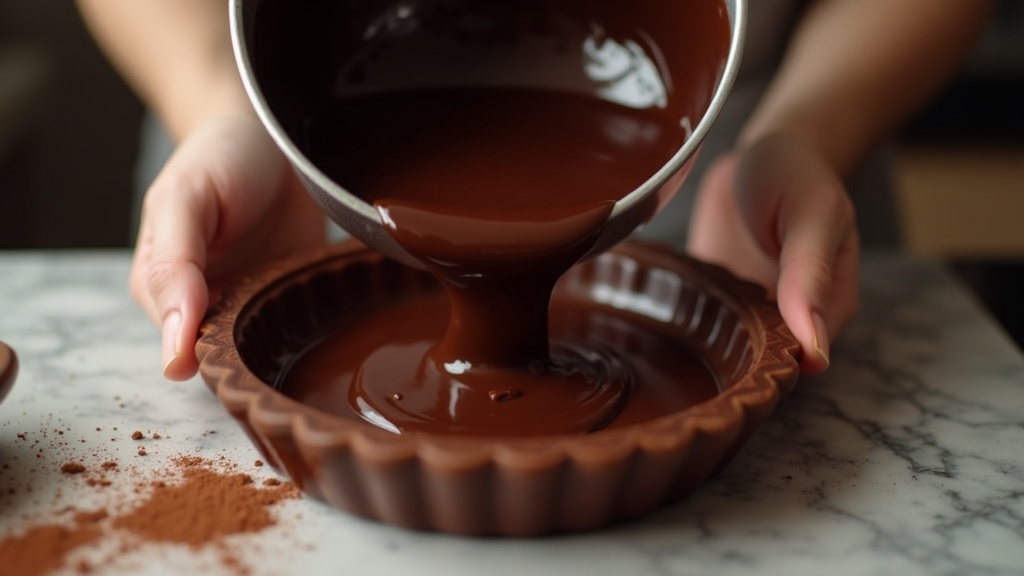
Chop your chocolate into small, even pieces. Set aside about 1/3 of it. Melt the remaining 2/3 in a double boiler over medium-low heat, stirring frequently. You want it completely melted and smooth — no lumps. Temperature should be around 115-120°F (46-50°C).
Why this matters: You're melting ALL the crystal structures so you start fresh.
2. Add the "seed" chocolate
Remove the melted chocolate from heat. Add the reserved 1/3 of chopped chocolate (the unmelted pieces) to the warm melted chocolate. Stir constantly for 2-3 minutes. Those unmelted pieces are "seeds" — they contain stable crystals that will guide the melted chocolate to crystallize properly as it cools.
What you're looking for: The chocolate should start to thicken slightly and lose its glossy look as it cools. This is good.
3. Test the temperature and texture
Once the chocolate feels like it's around 82-86°F (28-30°C) — it should feel warm but not hot to the touch — do a test: dip a knife or spoon into it and let it set at room temperature for a minute. If it hardens with a glossy finish and snaps cleanly when you bend it, you're tempered. If it's still soft or looks dull, keep stirring and let it cool a bit more.
Pro tip: This usually takes 3-5 minutes of stirring. Patience here pays off.
4. Use it immediately
Once tempered, use your chocolate right away for dipping, molding, or spreading. If it cools too much and starts to thicken, you can gently reheat it over the double boiler (keep it under 90°F/32°C) to loosen it back up without breaking the temper.
Common Problems & How to Fix Them
If your chocolate came out dull and grainy: You didn't cool it enough before the seed step, or your seeds weren't actually unmelted. Start over — make sure that 1/3 you set aside stays completely solid until you add it.
If your chocolate is too thick to work with: It cooled too much. Gently reheat it over the double boiler, stirring constantly, until it loosens up. Keep it under 90°F (32°C).
If it's still soft after it sets: Your chocolate might not be tempered, or you might be using chocolate with a lower cocoa butter content (cheaper chocolate sometimes behaves differently). Try again with higher-quality chocolate and make sure you're hitting that cooling phase.
If it's too thick even when warm: Your chocolate might have gotten water in it (even a tiny bit breaks the temper). Start completely fresh with dry equipment.
When You DON'T Need to Temper
Real talk: you don't always need tempered chocolate. Here's when you can skip it:
- Chocolate for baking: Melted chocolate in cookies, brownies, cakes — tempering doesn't matter because heat will break it down anyway
- Chocolate sauce or ganache: If you're making a pourable sauce, temper is irrelevant
- Chocolate you're eating immediately: Taste-wise, untempered chocolate is fine. It just looks dull and gets soft faster
You DO need to temper when:
- Making chocolate-dipped treats (strawberries, pretzels, cookies)
- Molding chocolate (truffles, chocolate bars, decorative pieces)
- Making chocolate that needs to look glossy and professional
- Making chocolate that needs to stay solid at room temperature
The Bottom Line
Chocolate tempering sounds fancy but it's really just managing crystal formation. The seeding method takes the guesswork out — you're not hunting for exact temperatures, just looking for visual and tactile cues. Melt, cool with seeds, test, use.
Once you've tempered chocolate once, you'll see why it matters. That glossy finish, that satisfying snap when you bite into it — that's the good crystals doing their job.
Try it this weekend with some strawberries or pretzels. You've got this.
Troubleshooting Checklist
- □ Chocolate melted to 115-120°F with no water contamination
- □ Seed chocolate added while still unmelted
- □ Stirred constantly for 3-5 minutes
- □ Test piece hardened with glossy finish (not dull)
- □ Kept working chocolate under 90°F while using
Made this? Tell me how it turned out — I read every comment. What did you dip? Did you nail the glossy finish on the first try?