
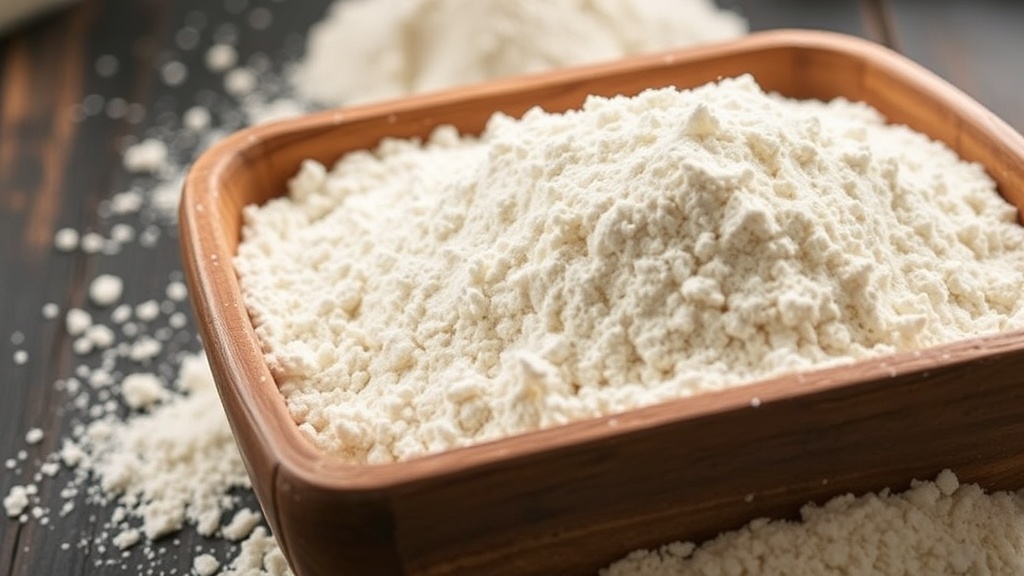
7 Types of Flour You Should Keep in Your Pantry

All-Purpose Flour: The Versatile Hero
Bread Flour: For Structure and Chew
Cake Flour: For Tenderness and Fine Crumb
Pastry Flour: The Middle Ground
Whole Wheat Flour: For Nutty Depth
Self-Rising Flour: The Convenient Choice
Almond Flour: The Gluten-Free Essential
You will learn the specific characteristics, protein contents, and ideal uses for the seven essential types of flour that every home baker needs to build a versatile pantry. Understanding these differences is the first step to troubleshooting common baking issues, such as why a cake might be too dense or why a bread loaf lacks structure. Having the right flour on hand ensures that your recipes turn out exactly as intended rather than becoming a guessing game of substitutions.
1. All-Purpose Flour
All-purpose flour is the workhorse of the home kitchen. It is a blend designed to be versatile enough for everything from cookies to savory pie crusts. Most standard brands found in grocery stores, such as King Arthur All-Purpose or Gold Medal, fall into this category. The protein content typically ranges between 10% and 11.5%, which provides enough structure for most casual baking without being so strong that it makes a delicate muffin tough.
The reason you need this in your pantry is for its reliability. When a recipe doesn't specify a type of flour, it is almost always assuming you are using all-purpose. It is particularly useful for recipes where you want a balanced crumb, such as chocolate chip cookies or basic quick breads like banana bread. However, because it is a middle-ground flour, it lacks the high protein needed for heavy doughs and the low protein required for ultra-tender pastries.
If you find your cookies are too flat or your biscuits aren't rising well, you might be reaching the limits of what all-purpose flour can do. For more complex doughs, you will need to move into specialized categories.
2. Bread Flour
Bread flour is defined by its high protein content, usually between 12% and 14%. This higher protein level translates to more gluten development when the dough is kneaded or mixed. Gluten is the protein network that traps gases produced by yeast, which is what allows bread to rise and maintain its shape. Without sufficient gluten, your loaf will likely be flat and dense.
You should keep bread flour in your pantry if you plan on baking yeast-based breads, such as sourdough, brioche, or focaccia. For example, if you are working with a sourdough starter, the strength of the bread flour is what allows that starter to expand the dough into a tall, airy loaf. If you notice why your sourdough starter isn't bubbling or failing to lift your dough, it may be due to a lack of protein strength in your flour choice.
Pro Tip: When using bread flour for softer breads like rolls, be careful not to over-knead, as the high protein can lead to a chewy, tough texture if you aren't careful. It is best used when you want a significant "chew" and a strong structure.
3. Cake Flour
Cake flour is the polar opposite of bread flour. It is highly refined, bleached, and has a very low protein content, typically around 6% to 8%. The bleaching process serves two purposes: it weakens the proteins even further to ensure a tender crumb, and it adjusts the pH of the flour to help cocoa powder and leavening agents react more effectively.
Use cake flour when you are making delicate sponges, pound cakes, or angel food cakes. The low protein prevents the formation of a tough gluten network, resulting in a fine, tight, and velvety crumb. If you attempt to use all-purpose flour in a recipe specifically calling for cake flour, your cake may end up with a coarse, heavy texture or a crumbly structure that lacks cohesion.
If you are making a chocolate cake, the interaction between the bleached cake flour and your cocoa powder is vital. To ensure the best results in your batters, remember why you should sift your dry ingredients together to incorporate air and prevent clumps of this fine flour from forming.
4. Pastry Flour
Pastry flour sits in the middle of the spectrum between all-purpose and cake flour. It generally has a protein content of about 8% to 9%. It is designed to provide a bit more structure than cake flour but remains much more tender than all-purpose flour. This makes it the ideal choice for shortcrust pastries, pie crusts, and tarts.
The goal when making a pie crust is to achieve a "flaky" texture. Flakiness is achieved by keeping the gluten development to a minimum. If you use bread flour for a pie crust, the crust will be tough and difficult to chew. If you use cake flour, the crust might be too fragile to hold the weight of the filling. Pastry flour provides that perfect balance of strength to hold a shape and tenderness to melt in your mouth.
5. Whole Wheat Flour
Unlike the previous flours which are highly processed to remove the bran and germ, whole wheat flour is made by grinding the entire wheat kernel. This means it contains all the fiber, vitamins, and minerals, but it also means it contains the bran and germ. The bran acts like tiny shards of glass within a dough; if you are not careful, it can actually cut through gluten strands, resulting in a shorter, denser loaf.
Keep whole wheat flour in your pantry to add nutritional value and a nutty flavor to your bakes. It is excellent for hearty sandwich breads, muffins, and certain types of cookies. When using it, I recommend a "blend" approach. Instead of substituting 100% of your white flour with whole wheat, try replacing 25% to 50% of your all-purpose or bread flour with whole wheat. This gives you the nutritional benefits and flavor without sacrificing the rise and texture of the bread.
6. Self-Rising Flour
Self-rising flour is a pre-mixed product that contains all-purpose flour, a leavening agent (usually baking powder), and a small amount of salt. This is a convenience flour designed to speed up the process of making quick breads, biscuits, and certain types-of pancakes or scones.
While it is helpful to have in the pantry for quick recipes, you must be careful with substitutions. You cannot simply swap self-rising flour for all-purpose flour in a recipe that already calls for baking powder and salt, or your baked goods will have an unpleasant, metallic taste and an over-leavened, collapsed structure. If a recipe calls for "self-rising flour," it is providing the leavening for you. If you are making something more advanced, like a delicate sponge cake, avoid this flour as the salt and leavening are too imprecise for high-level pastry work.
7. Almond Flour
Almond flour is a gluten-free alternative made from finely ground blanched almonds. It is not a wheat product, which means it behaves entirely differently in a recipe. It lacks the structural proteins found in grain-based flours, so it cannot be used to create "lift" or "chew" in the way bread or all-purpose flour can.
Almond flour is high in moisture and healthy fats, which makes it excellent for adding moisture to baked goods. It is a staple for making macarons, gluten-free almond cakes, and as a base for many paleo-style recipes. Because it is much heavier than wheat flour, it is often used in combination with other gluten-free flours (like rice flour or tapioca starch) to achieve a better texture. If you use it in a recipe meant for wheat flour without adjusting other ingredients, your bake will likely be very dense and oily.
Summary Table for Quick Reference
| Flour Type | Protein Content | Best Used For |
|---|---|---|
| All-Purpose | 10% - 11.5% | Cookies, muffins, basic breads |
| Bread Flour | 12% - 14% | Sourdough, yeast breads, bagels |
| Cake Flour | 6% - 8% | Sponge cakes, delicate cupcakes |
| Pastry Flour | 8% - 9% | Pie crusts, tarts, biscuits |
| Whole Wheat | Varies (High Fiber) | Hearty breads, healthy muffins |
| Self-Rising | Varies (Includes Leavening) | Quick biscuits, easy pancakes |
| Almond Flour | Low/None (Gluten-Free) | Macarons, moisture-rich cakes |
By keeping a variety of these flours in your pantry, you move away from "making do" with whatever is available and move toward intentional, successful baking. Each flour serves a specific structural purpose, and choosing the right one is the most effective way to ensure your kitchen successes become your standard.